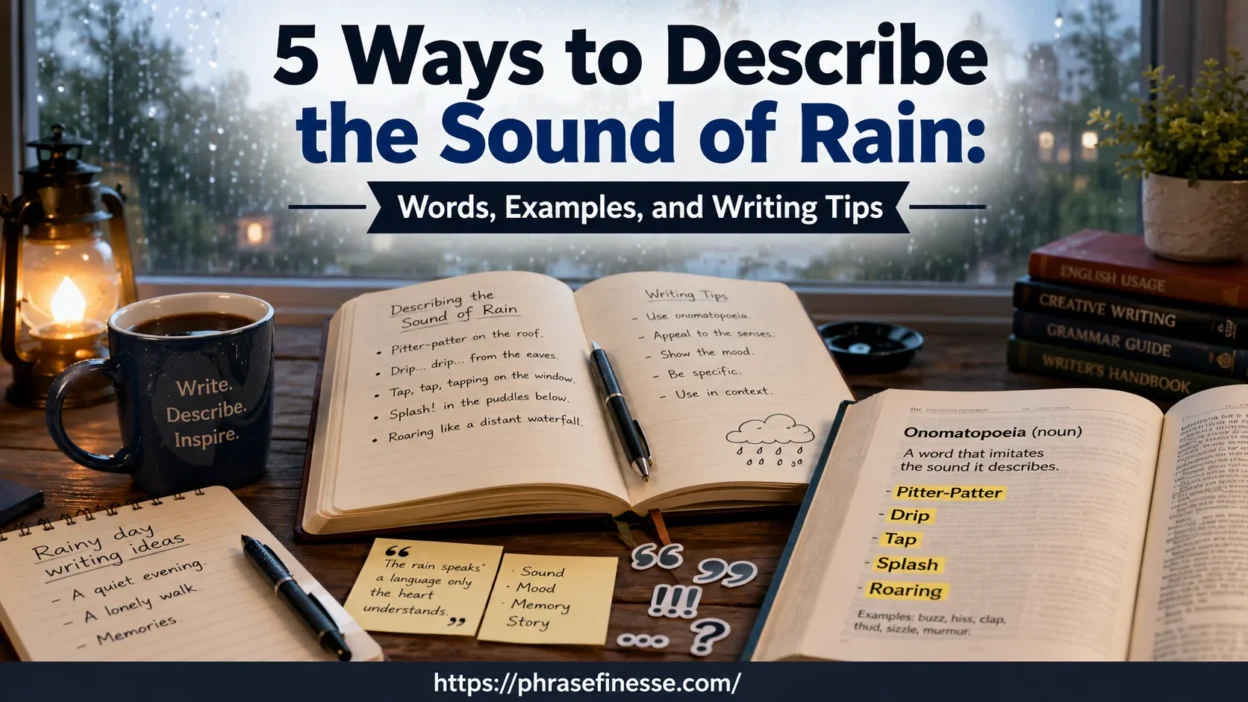
Have you ever listened to rainfall and wondered how writers capture that soothing, rhythmic sound with words? Understanding 5 Ways To Describe The Sound Of Rain (Onomatopoeia) can make your writing more vivid, engaging, and expressive. Whether you’re improving English usage, refining grammar, or creating immersive descriptions, the right rain-related onomatopoeic words help readers hear the scene as they read.
The sound of rain can range from a gentle pitter-patter on a windowpane to a loud splash, drip, or tap during a heavy storm. In creative and formal writing, choosing precise sound words adds clarity, realism, and consistency. These descriptive techniques are valuable across many contexts, including storytelling, broadcasting, content creation, business communication, and educational writing where vivid language improves audience engagement.
In this guide, you’ll discover five effective ways to describe the sound of rain using onomatopoeia, along with meanings, examples, and practical usage tips. We’ll also explore how these expressions strengthen communication in different settings, from creative projects to everyday topics such as scheduling, time management, online booking, meetings, calendar planning, and project management discussions. By the end, you’ll know exactly which rain sound word fits your context and how to use it naturally and effectively.
What Is the Sound of Rain Called?
The sound of rain doesn’t have a single official name.
Instead, writers use descriptive language, sound words, and onomatopoeia to capture how rainfall sounds in different situations. The exact description depends on several factors:
- Rain intensity
- Wind speed
- Surface contact
- Drop size
- Surrounding environment
- Mood of the scene
For example, a light drizzle may create a soft patter. Heavy rainfall may produce a roar. Rain striking leaves can sound like whispering. Rain hitting a metal roof often resembles drumming.
The goal isn’t simply to tell readers that rain is falling.
The goal is to help them hear it.
“Good description appeals to the senses. Great description makes readers feel present.”
Read More: 7 Ways to Spell the Sound of a Fart: Details and Onomatopoeia
Why Rain Sounds Matter in Writing
Sound creates atmosphere faster than almost any other sensory detail.
Consider these two sentences:
Example A
The rain fell outside.
Example B
The rain drummed steadily against the roof while wind rattled the windows.
Both sentences describe rainfall.
Only one creates a scene.
Rain sounds can communicate:
- Peacefulness
- Loneliness
- Comfort
- Romance
- Danger
- Suspense
- Nostalgia
- Power
Because rain naturally affects mood, choosing the correct sound description helps readers emotionally connect with the moment.
Understanding Different Categories of Rain Sounds
Before exploring specific descriptions, it helps to understand how rain changes its sound.
Light Rain
Characteristics:
- Small droplets
- Gentle impact
- Intermittent rhythm
Common descriptions:
- Pitter-patter
- Tapping
- Dripping
- Whispering
Moderate Rain
Characteristics:
- Consistent rainfall
- Noticeable volume
- Steady rhythm
Common descriptions:
- Drumming
- Pattering
- Splashing
Heavy Rain
Characteristics:
- Large droplets
- Loud impact
- Continuous sound
Common descriptions:
- Roaring
- Hammering
- Pelting
Storm Rain
Characteristics:
- Wind-driven
- Violent movement
- Intense noise
Common descriptions:
- Crashing
- Thundering
- Raging
Pitter-Patter: The Classic Sound of Light Rain
Few rain sound words are as recognizable as pitter-patter.
The term imitates the gentle rhythm created when small raindrops strike surfaces such as windows, sidewalks, leaves, or rooftops.
Because the word itself mimics the sound, it qualifies as onomatopoeia.
What Pitter-Patter Sounds Like
Imagine sitting near a window on a quiet afternoon.
Tiny droplets begin landing on the glass. They don’t hit hard. They don’t arrive in waves.
Instead, they create a soft rhythmic pattern.
That’s pitter-patter.
When to Use Pitter-Patter
Pitter-patter works best for:
- Drizzle
- Light showers
- Cozy indoor scenes
- Children’s stories
- Relaxing settings
Example Sentences
- The pitter-patter of rain on the window helped her drift to sleep.
- Outside, a gentle pitter-patter echoed through the garden.
- Rain began its familiar pitter-patter against the cabin roof.
Mood Created
| Quality | Effect |
| Soft | Comforting |
| Rhythmic | Relaxing |
| Light | Peaceful |
| Familiar | Nostalgic |
Writing Tip
Avoid using pitter-patter during intense storms. Readers associate the phrase with gentle rainfall rather than powerful weather.
Tapping: A Quiet and Delicate Rain Sound
Tapping describes rain that strikes a surface lightly but distinctly.
Unlike pitter-patter, which suggests multiple droplets creating a pattern, tapping often focuses on individual impacts.
What Tapping Sounds Like
Picture a few raindrops hitting a windowpane.
Each drop produces a separate sound.
Like Tap. Tap. and Tap.
The rhythm remains slow and deliberate.
Best Situations for Tapping
Tapping works especially well when rain falls on:
- Windows
- Car windshields
- Leaves
- Wooden surfaces
- Patio furniture
Example Sentences
- Rain tapped gently against the glass.
- A handful of droplets tapped the windshield before the storm arrived.
- The first signs of rain appeared as soft tapping on the porch railing.
Mood Created
Tapping often creates:
- Reflection
- Anticipation
- Solitude
- Calmness
Writers frequently use tapping in scenes where characters think, remember, or wait.
Mini Case Study
Imagine two mystery novel openings:
Version One
It was raining outside.
Version Two
Rain tapped softly against the office window as the detective studied the evidence.
The second version immediately creates an atmosphere without adding many words.
Drumming: The Steady Beat of Moderate Rain
As rainfall becomes heavier, individual droplets merge into a continuous rhythm.
That’s where drumming becomes useful.
What Drumming Means
Drumming compares rainfall to the repeated beat of a drum.
The sound feels consistent, noticeable, and energetic.
Unlike tapping, which highlights individual drops, drumming emphasizes repetition.
Where Drumming Occurs
Drumming commonly occurs on:
- Metal roofs
- Tin sheds
- Vehicles
- Wooden decks
- Building roofs
Example Sentences
- Rain drummed steadily on the roof throughout the night.
- Heavy showers drummed against the warehouse walls.
- The storm’s rain drummed overhead while everyone remained inside.
Why Writers Love Drumming
Drumming creates movement.
Readers can almost hear the repetitive impacts.
It also helps establish:
- Tension
- Energy
- Isolation
- Continuity
Mood Comparison
| Sound Word | Intensity | Mood |
| Tapping | Light | Gentle |
| Pitter-Patter | Light | Cozy |
| Drumming | Moderate | Active |
| Roaring | Heavy | Powerful |
Splattering: Rain That Hits With Force
Splattering describes rainfall striking a surface and scattering outward.
Unlike drumming, which focuses on rhythm, splattering emphasizes impact.
What Splattering Sounds Like
Large raindrops hit the surface.
Water bursts outward.
Tiny droplets scatter.
The resulting sound feels sharp, energetic, and messy.
Common Surfaces
Rain often splatters on:
- Sidewalks
- Roads
- Puddles
- Concrete
- Mud
Example Sentences
- Rain splattered across the pavement.
- Large drops splattered against the sidewalk.
- Water splattered from puddles as cars drove past.
Mood Created
Splattering adds:
- Action
- Movement
- Urgency
- Realism
Writers often use it during scenes with rapidly changing weather.
Practical Writing Example
Instead of writing:
“The rain fell heavily.”
Try:
“Rain splattered across the pavement and bounced from every puddle.”
The second sentence creates a stronger visual and auditory experience.
Roaring: The Sound of Heavy Rain
At the highest intensity level, rainfall no longer sounds like individual drops.
Instead, it becomes a continuous wall of sound.
This is where roaring enters the picture.
What Roaring Means
Roaring describes the loud, overwhelming noise created by extremely heavy rainfall.
The sound resembles:
- Ocean waves
- Strong wind
- Waterfalls
- Powerful machinery
When to Use Roaring
Roaring works best for:
- Thunderstorms
- Tropical downpours
- Severe weather
- Hurricanes
- Monsoon rain
Example Sentences
- Rain roared across the valley.
- The storm’s rain roared against the house.
- Outside, a roaring curtain of water hid the road from view.
Emotional Impact
Roaring often communicates:
- Power
- Danger
- Chaos
- Awe
It reminds readers that nature can be beautiful and intimidating at the same time.
How Different Surfaces Change the Sound of Rain
One reason rain sounds so varied is that every surface creates a different acoustic effect.
Rain on Windows
Common descriptions:
- Tapping
- Pattering
- Clicking
Mood:
- Quiet
- Reflective
- Intimate
Rain on Roofs
Common descriptions:
- Drumming
- Hammering
- Beating
Mood:
- Protective
- Cozy
- Immersive
Rain on Leaves
Common descriptions:
- Rustling
- Whispering
- Shimmering
Mood:
- Natural
- Peaceful
- Fresh
Rain on Pavement
Common descriptions:
- Splattering
- Splashing
- Hissing
Mood:
- Urban
- Active
- Dynamic
Rain on Water
Common descriptions:
- Plopping
- Rippling
- Splashing
Mood:
- Serene
- Visual
- Atmospheric
Rain Sound Words Writers Can Use
The following table provides a quick reference guide.
| Rain Sound Word | Rain Intensity | Best Use |
| Pitter-patter | Light | Cozy scenes |
| Tapping | Light | Windows and glass |
| Pattering | Light to moderate | General rainfall |
| Drumming | Moderate | Roofs and metal |
| Splashing | Moderate | Water surfaces |
| Splattering | Moderate to heavy | Pavement and puddles |
| Hammering | Heavy | Violent storms |
| Hissing | Continuous rain | Atmospheric scenes |
| Roaring | Very heavy | Severe storms |
| Pelting | Heavy | Wind-driven rain |
Onomatopoeia for the Sound of Rain
Onomatopoeia occurs when a word imitates a sound.
Rain provides countless examples.
Popular rain onomatopoeia includes:
- Pitter-patter
- Drip-drop
- Plip-plop
- Tap-tap
- Splash
- Splat
- Hiss
- Plunk
These words add realism because readers can almost hear them while reading.
For children’s literature and descriptive fiction, onomatopoeia often creates a stronger sensory experience than standard descriptions.
Choosing the Right Rain Description
The best rain sound depends on three things:
Match the Intensity
Light rain:
- Tapping
- Pitter-patter
- Dripping
Moderate rain:
- Drumming
- Pattering
- Splashing
Heavy rain:
- Hammering
- Roaring
- Pelting
Match the Mood
Relaxing scene:
- Pitter-patter
- Whispering
Suspense scene:
- Tapping
- Drumming
Action scene:
- Splattering
- Hammering
Storm scene:
- Roaring
- Crashing
Match the Setting
Urban setting:
- Splattering pavement
- Hissing streets
Forest setting:
- Whispering leaves
- Rustling branches
Coastal setting:
- Roaring rain
- Wind-driven spray
Common Mistakes When Describing Rain Sounds
Repeating the Same Word
Using “rain tapped” five times in one chapter quickly becomes repetitive.
Mix descriptions naturally.
Ignoring Intensity
A hurricane shouldn’t pitter-patter.
Likewise, a drizzle shouldn’t roar.
Forgetting Surface Details
Rain sounds different on metal than on leaves.
Specificity creates realism.
Overloading Description
You don’t need five adjectives for every raindrop.
One strong sound word usually works better than several weak ones.
Quick Reference: The Best Ways to Describe the Sound of Rain
| Description | Intensity | Typical Mood |
| Pitter-patter | Light | Cozy |
| Tapping | Light | Calm |
| Drumming | Moderate | Steady |
| Splattering | Moderate to Heavy | Energetic |
| Roaring | Heavy | Powerful |
Each word serves a different purpose. Choosing the right one depends on the atmosphere you want readers to experience.
FAQs
1. What is onomatopoeia in English grammar?
Onomatopoeia is a figure of speech in which a word imitates or suggests the natural sound it describes. Examples include buzz, hiss, clang, and pitter-patter. These words help readers hear sounds through written language, making descriptions more vivid and engaging.
2. What are the most common onomatopoeic words for the sound of rain?
Some of the most common words used to describe the sound of rain include pitter-patter, drip, tap, splash, and plop. Each word represents a slightly different rain sound, from light showers to heavy downpours.
3. Why is onomatopoeia important in writing?
Onomatopoeia adds sensory detail and realism to writing. It helps readers imagine sounds more clearly, strengthens descriptions, and creates a more immersive reading experience. Writers often use it in stories, poems, articles, and creative content.
4. Can onomatopoeia be used in formal writing?
Yes, but it should be used carefully. While onomatopoeic words are most common in creative writing, they can also appear in articles, educational content, and other forms of formal writing when they improve clarity or help explain a sound more effectively.
5. How can I improve my use of onomatopoeia?
Start by listening closely to real-world sounds and matching them with appropriate words. Reading fiction, poetry, and descriptive articles can also help you learn how experienced writers use sound words naturally and effectively.
6. Is “pitter-patter” the only word for the sound of rain?
No. While pitter-patter is one of the most popular rain-related onomatopoeic words, many others exist. Depending on the intensity of the rainfall, you can use words such as drip, plop, tap, splash, or even combine several sound words to create a richer description.
Conclusion
The sound of rain can evoke comfort, nostalgia, excitement, or even drama, depending on how it is described. By learning these 5 ways to describe the sound of rain (onomatopoeia), you can bring greater depth and realism to your writing. Words such as pitter-patter, drip, tap, plop, and splash allow readers to experience rainfall rather than simply read about it.
Whether you’re improving your English usage, enhancing grammar skills, or developing stronger descriptive techniques, mastering onomatopoeia is a valuable step. The right sound word can transform an ordinary sentence into a memorable image, helping your writing connect more effectively with readers while remaining clear, natural, and engaging.