Have you ever struggled to describe a sharp whistle in writing without losing its impact? Whether you’re crafting dialogue, storytelling, or sound effects, choosing the right onomatopoeia can make your writing feel more vivid and authentic. In this guide, 6 Good Ways To Spell A Whistle Sound (Onomatopoeia) explores the most effective spellings writers use to represent a whistle sound, helping you improve English usage, grammar, and overall writing clarity.
A well-written sound effect does more than imitate noise. It adds emotion, atmosphere, and realism to a scene. From fiction and creative content to formal writing, business communication, and even broadcasting, the correct representation of a whistle can strengthen reader engagement and maintain consistency throughout your work. Understanding how different whistle spellings convey tone and intensity can also improve communication in instructional or descriptive content.
In the sections below, you’ll discover six commonly accepted ways to spell a whistle sound, along with practical examples and usage tips. We’ll also examine when each version works best and how context influences word choice. While topics such as scheduling, time management, online booking, meetings, calendar organization, and project management often rely on precise language, the same principle applies to sound-based writing. Choosing the right onomatopoeic expression helps your message remain clear, engaging, and professional.
What Is the Correct Way to Spell a Whistle Sound?
The short answer is simple:
There is no single correct spelling for a whistle sound.
Whistle sounds are usually represented through creative spelling. Writers modify letters, add extra vowels, or stretch sounds to communicate exactly what readers should hear.
For example:
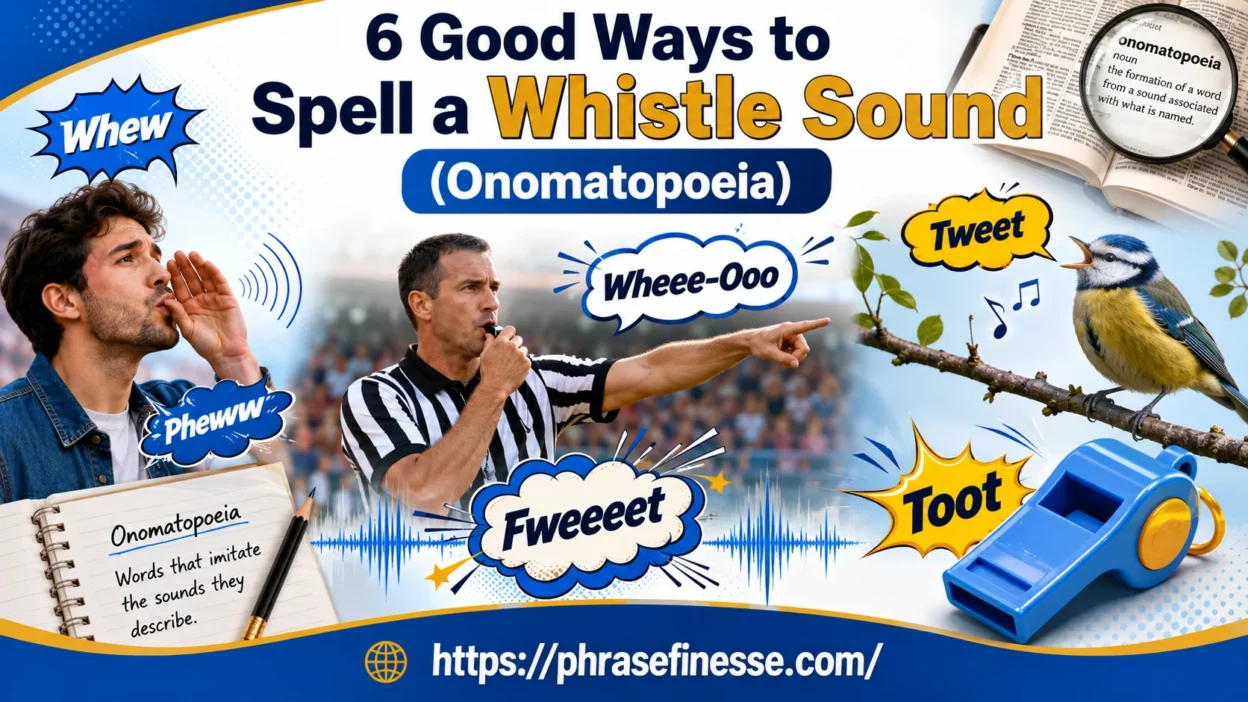
- Whew! often suggests a soft whistle of admiration or relief.
- Wheee-ooo! creates a playful rising-and-falling whistle.
- Fweeeet! suggests a sharp, high-pitched whistle.
- Toot! often represents a short whistle blast.
The goal isn’t technical accuracy.
The goal is helping readers instantly recognize the sound.
Why Whistle Sounds Are Difficult to Spell
Most sounds in real life contain subtle variations that written language struggles to capture.
Consider these examples:
| Type of Whistle | Real-Life Sound | Common Written Form |
| Human whistle | Long and smooth | Whew |
| Wolf whistle | Rising and falling | Wheee-ooo |
| Referee whistle | Sharp blast | Tweet |
| Bird whistle | High-pitched chirp | Fweeeet |
| Toy whistle | Short burst | Toot |
| Kettle whistle | Sustained high note | Fweeeee |
Even two people hearing the same whistle may spell it differently.
That’s perfectly normal.
Whew
Among all whistle spellings, whew is one of the most widely recognized.
Most readers immediately understand its meaning because it appears frequently in books, online discussions, and everyday conversation.
What “Whew” Sounds Like
“Whew” usually represents:
- A soft whistle
- A breathy exhale
- A low whistle of admiration
- Relief after tension
It often blends an actual whistle sound with an emotional reaction.
When to Use Whew
This spelling works best when a character:
- Sees something impressive
- Escapes danger
- Feels relieved
- Reacts to surprising news
Examples
“Whew,” Jake whistled. “That’s one expensive car.”
“Whew! That was close.”
She let out a low “whew” after seeing the final score.
Why Writers Like It
The spelling feels natural.
Readers don’t have to stop and interpret the sound. They understand it instantly.
That’s valuable because strong writing keeps readers immersed instead of forcing them to decode unusual spellings.
Best Contexts
| Writing Type | Works Well? |
| Novels | Yes |
| Short stories | Yes |
| Dialogue | Yes |
| Text messages | Yes |
| Comic books | Sometimes |
Phewww
Sometimes a whistle lasts longer.
In those situations, writers often stretch the spelling to communicate duration.
That’s where phewww comes in.
What “Phewww” Sounds Like
This spelling suggests:
- A prolonged whistle
- A long exhale
- Extended relief
- Sustained admiration
The extra letters visually communicate length.
Readers naturally spend more time reading the word.
Example Sentences
“Phewww,” Marcus said. “I thought we’d never make it.”
Phewww! What a game.
She leaned back and let out a long “phewww.”
Why Extra Letters Work
Writers often manipulate spelling to control pacing.
Consider the difference:
- Whew
- Phewwwwww
The second version feels longer before you even pronounce it mentally.
That visual effect helps readers hear the intended sound.
When to Avoid It
Too many repeated letters can become distracting.
For example:
Phewwwwwwwwwwwwwwwwwwwwww
Most readers find excessive stretching difficult to read.
A few extra letters usually work better.
Wheee-Ooo
If you’ve ever watched cartoons, you’ve probably encountered a sound similar to wheee-ooo.
This spelling captures a whistle that rises and falls in pitch.
What It Sounds Like
The sound often communicates:
- Flirting
- Playfulness
- Amazement
- A classic wolf whistle
The first half rises.
The second half falls.
Readers instinctively recognize the pattern.
Common Uses
You’ll often see this spelling in:
- Comic books
- Screenplays
- Humor writing
- Graphic novels
- Animated storytelling
Example Sentences
“Wheee-ooo!” shouted the crowd when the sports car rolled into view.
A playful “wheee-ooo” echoed from across the room.
Someone in the audience let out a dramatic “wheee-ooo.”
Why It Works
The hyphen visually separates the pitch change.
Without that break, readers may miss the intended rhythm.
Mini Case Study
Imagine a comic panel showing a character arriving in a flashy sports car.
Which sound creates a stronger image?
Version A
Whew!
Version B
Wheee-ooo!
Most readers immediately picture a playful wolf whistle with Version B.
The sound creates a clearer mental image.
That’s the power of choosing the right onomatopoeia.
Fweeeet
Few whistle spellings capture sharpness better than fweeeet.
This sound feels crisp, piercing, and high-pitched.
What “Fweeeet” Sounds Like
Think of:
- Small birds
- Sharp whistles
- Children’s toys
- Quick attention-grabbing sounds
The spelling naturally feels lighter than deeper whistle sounds.
Example Sentences
Fweeeet! The bird darted from branch to branch.
The coach signaled practice with a loud “fweeeet.”
A sharp “fweeeet” cut through the morning air.
Why It Works
The opening “fw” combination creates an airy sensation.
Readers often associate it with a quick burst of sound.
Best Uses
- Nature writing
- Children’s stories
- Comic books
- Sports scenes
- Fantasy fiction
Tweet
Although people often associate “tweet” with birds, writers sometimes use it as a whistle sound effect.
What Tweet Sounds Like
Tweet usually represents:
- Short whistles
- Bird calls
- Light chirps
- Delicate sounds
It’s brief and instantly recognizable.
Example Sentences
Tweet! A sparrow landed on the fence.
The tiny whistle answered with a cheerful tweet.
Tweet, tweet, came the sound from the garden.
Advantages
Readers already know what the word sounds like.
That familiarity improves readability.
Limitations
Tweet doesn’t work well for:
- Deep whistles
- Long whistles
- Human wolf whistles
- Train whistles
Use it only when the sound resembles a chirp.
Toot
Simple.
Direct.
Easy to understand.
That’s why toot remains popular.
What “Toot” Sounds Like
Toot generally suggests:
- A quick whistle blast
- A toy whistle
- A train whistle
- A referee signal
The sound is short and decisive.
Example Sentences
Toot! The train announced its arrival.
The referee blew a sharp toot.
Toot! Toot! went the toy whistle.
Why Readers Understand It
The word has existed in sound-effect writing for generations.
Most readers recognize it immediately.
That familiarity makes it highly effective.
Read More: 5 Words for the Sound of Glass Breaking with Onomatopoeia
Comparison Table of Common Whistle Sound Spellings
| Spelling | Pitch | Duration | Typical Use |
| Whew | Medium | Short | Relief, admiration |
| Phewww | Medium | Long | Extended relief |
| Wheee-ooo | Rising/Falling | Medium | Wolf whistles |
| Fweeeet | High | Medium | Sharp whistles |
| Tweet | High | Short | Bird sounds |
| Toot | Medium | Short | Referee or train whistles |
How Professional Writers Handle Whistle Sounds
Interestingly, many experienced authors avoid spelling whistle sounds altogether.
Instead, they describe them.
Consider these examples:
He let out a long whistle.
A shrill whistle pierced the silence.
She whistled softly through her teeth.
The referee blasted a piercing whistle.
Notice something?
These descriptions often create a stronger image than onomatopoeia alone.
FAQs
1. What is onomatopoeia in English grammar?
Onomatopoeia is the use of words that imitate real-life sounds. Examples include buzz, hiss, bang, and various spellings of a whistle sound. Writers use onomatopoeia to make descriptions more vivid and engaging.
2. How do you spell a whistle sound in writing?
There is no single correct spelling for a whistle sound. Common options include “whew,” “tweet,” “pheeew,” “fweee,” “whee,” and “whooo.” The best choice depends on the context, tone, and intensity of the sound you want to convey.
3. Why are there different ways to spell a whistle sound?
Whistles can vary in pitch, length, and volume. Because of this, writers use different onomatopoeic spellings to capture specific sound qualities and emotions. A short whistle may require a different spelling than a long, dramatic one.
4. Which whistle sound spelling is most commonly used?
“Whew” is one of the most widely recognized spellings, especially when expressing relief or surprise. However, “tweet” is often used for bird-like whistles, while “whee” can suggest excitement or playfulness.
5. Can whistle sound spellings be used in formal writing?
In most cases, onomatopoeia appears in creative writing, fiction, comics, and dialogue rather than formal documents. However, it can be used sparingly in descriptive or illustrative contexts when it improves clarity and reader understanding.
6. How can I choose the best whistle sound for my writing?
Consider the sound’s length, pitch, emotion, and purpose. A cheerful whistle may work best with “whee” or “tweet,” while a long, dramatic whistle might be better represented by “pheeew” or “whooo.” Always choose the spelling that matches the scene and maintains consistency throughout your writing.
Conclusion
Spelling a whistle sound in writing is not an exact science, but the right onomatopoeia can bring your words to life. Whether you choose “whew,” “tweet,” “whee,” “fweee,” “pheeew,” or “whooo,” each option creates a slightly different effect and helps readers hear the sound in their minds. Understanding these subtle differences improves English usage, strengthens creative writing, and enhances the overall reading experience. By selecting the spelling that best fits your context, tone, and audience, you can make your descriptions more vivid, memorable, and effective.

Mia Rose is an English language specialist and editorial writer at Phrase Finesse, where she helps readers master grammar, vocabulary, spelling, and effective communication. Passionate about making English simple and practical, she creates well-researched, reader-friendly content that explains complex language concepts in a clear and engaging way.
With extensive experience in English language education, content writing, and editorial review, Mia specializes in grammar, punctuation, word choice, idioms, confusing word pairs, and writing style. Her articles are carefully researched, fact-checked, and designed to help students, professionals, writers, and English learners build confidence in both written and spoken English.