Have you ever trusted someone’s promise, only to watch them break it later? Understanding 5 Words for Someone Who Doesn’t Keep Their Word can help you describe that behavior accurately in both personal and professional situations. Whether you’re discussing reliability, trustworthiness, consistency, or accountability, choosing the right word strengthens your communication and improves clarity.
In workplaces, keeping commitments affects business communication, project management, meetings, and even daily scheduling. A person who repeatedly fails to honor promises can create confusion in time management, disrupt a shared calendar, and impact important tasks such as online booking or team coordination.
Knowing the correct vocabulary allows you to express these situations with precision and confidence.
This guide explores 5 Words For Someone Who Doesn’t Keep Their Word, explaining their meanings, usage, and subtle differences. You’ll also discover practical examples, insights into English usage, grammar, and formal writing, plus tips for selecting the most appropriate term for different contexts.
By the end, you’ll have a stronger vocabulary for describing unreliable behavior in a clear, professional, and effective way.
What Do You Call Someone Who Doesn’t Keep Their Word?
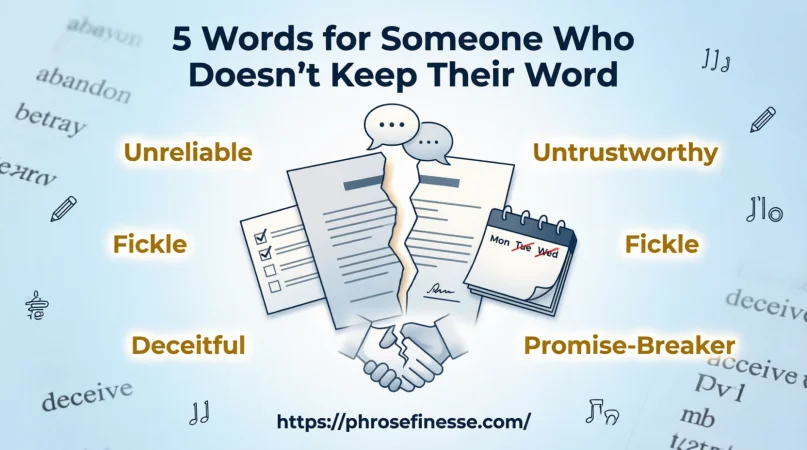
The simplest answer is that such a person may be described as unreliable, untrustworthy, fickle, deceitful, or a promise-breaker.
Each word highlights a different aspect of the behavior.
For example, someone who forgets commitments due to poor organization may be unreliable. Someone who knowingly makes promises they never intend to keep may be deceitful.
Choosing the right word depends on context, frequency, and intent.
Quick Comparison Table
| Word | Meaning | Severity | Typical Context |
| Unreliable | Cannot be depended on | Low to Medium | Everyday situations |
| Untrustworthy | Not deserving of trust | Medium to High | Personal and professional relationships |
| Fickle | Frequently changes opinions or commitments | Medium | Social and emotional situations |
| Deceitful | Intentionally misleading | High | Serious trust violations |
| Promise-breaker | Frequently breaks promises | Medium to High | Direct commitment-related situations |
Unreliable: The Most Common Word for Someone Who Doesn’t Keep Their Word
When people ask for a word for someone who doesn’t keep promises, unreliable is often the safest and most widely accepted choice.
An unreliable person cannot consistently be counted on to fulfill commitments. They may not necessarily be dishonest. Instead, they often struggle with follow-through.
What Makes Someone Unreliable?
Several behaviors contribute to a reputation for unreliability:
- Missing deadlines
- Forgetting appointments
- Arriving late repeatedly
- Failing to complete agreed tasks
- Frequently canceling plans
- Making commitments they cannot realistically fulfill
Imagine a friend who always says they’ll attend events but rarely shows up. They may not be lying. However, their actions make them unreliable.
Example Sentences
- “He’s talented, but he’s incredibly unreliable when it comes to deadlines.”
- “I stopped depending on her because she’s proven to be unreliable.”
- “An unreliable employee can disrupt an entire team.”
When Not to Use Unreliable
Avoid this term when someone’s behavior involves deliberate deception.
For instance, if a person intentionally lies about their intentions, stronger words such as deceitful or dishonest may be more appropriate.
Why Reliability Matters
Reliability acts like the mortar between bricks in a building. Without it, even strong relationships begin to crumble.
Research in organizational psychology consistently shows that dependable individuals are more likely to be viewed as leaders, trusted teammates, and valuable long-term partners.
Untrustworthy: When Confidence Has Been Lost
A person becomes untrustworthy when others no longer believe their words, actions, or intentions.
Unlike unreliability, which may stem from poor planning or forgetfulness, untrustworthiness usually involves a deeper loss of confidence.
What Does Untrustworthy Mean?
An untrustworthy person has demonstrated behavior that causes others to question whether they can be believed.
Common signs include:
- Repeated broken promises
- Contradictory statements
- Lack of accountability
- Frequent excuses
- Hidden motives
- Dishonesty
Unreliable vs. Untrustworthy
Although people often use these terms interchangeably, they aren’t identical.
| Trait | Unreliable | Untrustworthy |
| Misses commitments | Yes | Often |
| Intentionally deceptive | Not necessarily | Sometimes |
| Can regain trust quickly | Often | Usually harder |
| Damages credibility | Yes | Significantly |
Think of it this way:
An unreliable person may disappoint you.
An untrustworthy person may make you question everything they say.
Example Sentences
- “His repeated excuses made him seem untrustworthy.”
- “Nobody wanted to share sensitive information with someone viewed as untrustworthy.”
- “Years of broken promises destroyed her reputation.”
The Long-Term Impact
Trust takes years to build and moments to destroy.
Once someone gains a reputation for being untrustworthy, repairing that image can become extraordinarily difficult.
Fickle: Someone Who Constantly Changes Their Mind
Another useful word for someone who doesn’t keep their word is fickle.
This term focuses less on honesty and more on inconsistency.
A fickle person frequently changes their preferences, opinions, loyalties, or commitments.
What Does Fickle Mean?
A fickle individual often follows emotions, trends, or temporary interests rather than long-term commitments.
As a result, they may sincerely intend to keep a promise one day and abandon it the next.
Characteristics of Fickle People
Common traits include:
- Changing opinions frequently
- Difficulty committing
- Constantly shifting priorities
- Following trends impulsively
- Losing interest quickly
Example Sentences
- “Investors can be fickle during uncertain markets.”
- “He’s too fickle to stick with long-term plans.”
- “Her fickle nature makes commitments difficult.”
Fickle vs. Unreliable
The distinction is subtle but important.
| Fickle | Unreliable |
| Changes mind often | Fails to follow through |
| Motivated by shifting interests | Motivated by poor dependability |
| May genuinely mean well | Often inconsistent regardless of intent |
A fickle person resembles a weather vane spinning with the wind. Their commitments shift as circumstances change.
Deceitful: When Broken Promises Become Intentional
Some people fail to keep promises because of poor organization.
Others never intended to keep them at all.
That’s where the word deceitful becomes appropriate.
What Does Deceitful Mean?
A deceitful person deliberately misleads others through lies, manipulation, or false promises.
This is one of the strongest words available for someone who doesn’t keep their word.
Signs of Deceitful Behavior
Watch for patterns such as:
- Making promises without intent to fulfill them
- Hiding important information
- Manipulating facts
- Lying to avoid consequences
- Creating false expectations
Example Sentences
- “His deceitful behavior cost him several business partnerships.”
- “The salesperson’s deceitful claims damaged customer trust.”
- “Repeated false promises revealed a deceitful character.”
Why Intent Matters
Intent changes everything.
Someone who misses a deadline due to illness isn’t deceitful.
Someone who knowingly makes false promises to gain an advantage is.
That distinction separates simple unreliability from serious ethical misconduct.
Related Words
You may also encounter:
- Dishonest
- Fraudulent
- Duplicitous
- Misleading
- Manipulative
These words carry stronger negative connotations and should be used carefully.
Promise-Breaker: The Most Direct Description
Sometimes the simplest word is the most effective.
A promise-breaker is exactly what the term suggests: a person who breaks promises.
Unlike other labels, this expression directly focuses on the specific behavior.
When Does This Label Fit?
The term works best when someone repeatedly fails to honor commitments.
Examples include:
- Breaking agreements
- Ignoring obligations
- Failing to fulfill pledges
- Backing out after giving assurances
Example Sentences
- “Nobody wanted to rely on a known promise-breaker.”
- “His reputation as a promise-breaker followed him for years.”
- “Trust declines quickly when someone becomes a habitual promise-breaker.”
Why Broken Promises Hurt
Promises create expectations.
When those expectations aren’t met, disappointment follows.
Repeated disappointment eventually becomes distrust.
It’s similar to a bank account. Every fulfilled promise makes a deposit. Every broken promise makes a withdrawal. Eventually, the balance reaches zero.
Other Useful Words and Expressions
English offers several additional terms that describe people who fail to honor commitments.
Flaky
Flaky is a popular informal American English term.
A flaky person frequently changes plans or cancels commitments without much warning.
Examples:
- Missing social events
- Canceling at the last minute
- Forgetting obligations
Inconsistent
An inconsistent person behaves unpredictably.
They may perform well one week and poorly the next.
Unlike deceitful individuals, inconsistency doesn’t necessarily imply bad intentions.
Disloyal
This word applies when broken commitments involve loyalty.
Examples include:
- Betraying friends
- Abandoning teams
- Violating trust in relationships
Two-Faced
A two-faced person says one thing and does another.
This expression often suggests hypocrisy.
Reneger
A reneger is someone who backs out of an agreement after initially accepting it.
The word is less common today but remains useful in formal discussions.
See More :Driver License vs Driver’s License: Grammar & Usage Guide
Choosing the Right Word Based on Context
Selecting the best term depends on the situation.
For Everyday Conversations
Use:
- Unreliable
- Flaky
- Inconsistent
These words sound less harsh.
For Workplace Settings
Use:
- Unreliable
- Inconsistent
- Untrustworthy
Professional environments often require more precise language.
For Ethical Concerns
Use:
- Deceitful
- Dishonest
- Duplicitous
These terms indicate intentional wrongdoing.
For Broken Promises Specifically
Use:
- Promise-breaker
- Reneger
These focus directly on commitments.
Common Mistakes When Describing Someone Who Doesn’t Keep Their Word
People often misuse these terms.
Let’s examine some common errors.
Confusing Reliability With Honesty
Someone can be honest yet unreliable.
For example:
A friend may genuinely intend to help but consistently forgets.
They’re unreliable.
They aren’t necessarily dishonest.
Using Excessively Harsh Labels
Words such as deceitful carry serious implications.
One missed appointment doesn’t make someone deceitful.
Look for patterns before assigning stronger labels.
Ignoring Context
Life happens.
Emergencies occur.
Unexpected circumstances arise.
A single broken promise shouldn’t define a person’s character.
Repeated behavior paints a more accurate picture.
Real-Life Examples of People Who Don’t Keep Their Word
Workplace Scenario
Imagine a project manager who continually promises reports by Friday.
Friday arrives.
The reports don’t.
After several months, coworkers stop relying on those commitments.
The manager develops a reputation for being unreliable.
Friendship Scenario
A friend agrees to attend birthdays, dinners, and social gatherings.
However, they repeatedly cancel hours beforehand.
Over time, others may describe them as flaky or unreliable.
Business Partnership Scenario
A vendor repeatedly guarantees delivery dates.
Each deadline passes without fulfillment.
Eventually, clients view the vendor as untrustworthy.
Revenue and relationships suffer.
Relationship Scenario
A partner promises meaningful changes but never follows through.
Years of broken promises erode confidence.
The issue eventually shifts from reliability to trustworthiness.
How Broken Promises Affect Trust
Broken promises create consequences that extend far beyond the original commitment.
Personal Relationships
Trust forms the emotional foundation of healthy relationships.
Repeated disappointment can lead to:
- Frustration
- Resentment
- Emotional distance
- Reduced communication
Professional Reputation
In business, reliability often matters as much as skill.
People prefer working with individuals who consistently deliver results.
Even highly talented professionals may struggle if colleagues can’t depend on them.
Long-Term Credibility
Credibility develops through repeated actions.
People evaluate what you do more than what you say.
As the old saying goes:
“Actions speak louder than words.”
A reputation for reliability becomes a valuable asset.
A reputation for broken promises becomes a significant liability.
Synonyms and Related Terms Comparison Table
| Term | Keeps Promises? | Honest? | Reliable? | Formality |
| Unreliable | Usually No | Usually Yes | No | Formal |
| Untrustworthy | Often No | Often No | Often No | Formal |
| Fickle | Sometimes No | Usually Yes | Inconsistent | Medium |
| Deceitful | No | No | No | Formal |
| Flaky | Sometimes No | Usually Yes | No | Informal |
| Reneger | No | Varies | No | Medium |
| Promise-Breaker | No | Varies | No | Medium |
Why People Fail to Keep Their Word
Understanding the reasons behind broken promises provides additional context.
Common causes include:
Poor Time Management
Many commitments fail because people overestimate available time.
People-Pleasing
Some individuals say “yes” to avoid disappointing others.
Ironically, this often creates even greater disappointment later.
Fear of Conflict
Instead of declining a request honestly, a person may make a promise they never intend to fulfill.
Lack of Accountability
Without consequences, some people become comfortable breaking commitments.
Deliberate Manipulation
In more serious cases, promises become tools used to influence or control others.
Recognizing the underlying cause helps determine whether someone is unreliable, untrustworthy, fickle, or deceitful.
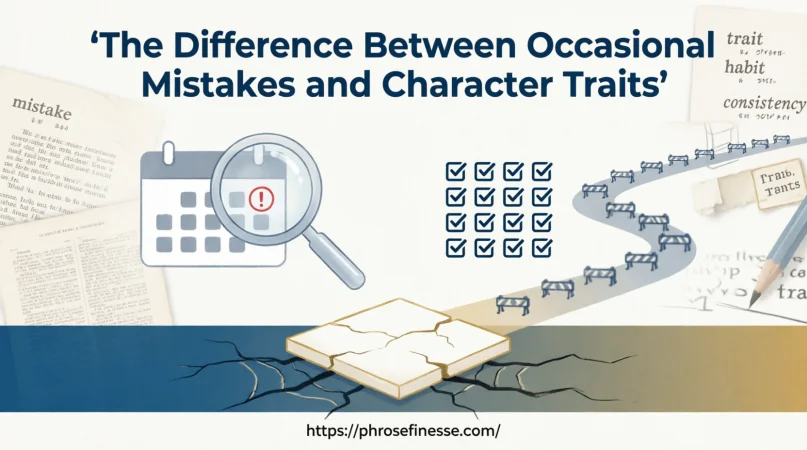
The Difference Between Occasional Mistakes and Character Traits
It’s important not to label people unfairly.
- Everyone breaks a promise occasionally.
2. Everyone forgets something.
3. Everyone misses a deadline at some point.
Character traits emerge through repeated patterns.
Ask yourself:
- Is this behavior recurring?
- Does it happen frequently?
- Is there evidence of intent?
- Have others noticed the same pattern?
The answers often reveal whether you’re dealing with a simple mistake or a deeper issue.
FAQs
What do you call someone who doesn’t keep their word?
Someone who doesn’t keep their word may be described as unreliable, untrustworthy, dishonest, inconsistent, or unfaithful to their commitments. The best word depends on the specific situation and the person’s behavior.
Is “unreliable” the same as “dishonest”?
Not always. Unreliable means a person cannot be depended on to follow through consistently, while dishonest suggests intentional deception or a lack of truthfulness. Someone can be unreliable without deliberately lying.
Which word is most professional for workplace communication?
In professional settings, unreliable is usually the safest and most appropriate term. It focuses on behavior and performance without making assumptions about a person’s intentions.
Why is keeping your word important?
Keeping your word builds trust, strengthens business communication, improves teamwork, and supports effective project management. It also promotes consistency and accountability in personal and professional relationships.
Can failing to keep promises affect workplace productivity?
Yes. When people fail to honor commitments, it can disrupt scheduling, create problems with time management, delay meetings, and negatively impact shared calendar planning and team objectives.
How can I describe someone who occasionally breaks promises?
If the behavior happens occasionally, terms such as inconsistent or unreliable at times may be more accurate than stronger words like dishonest or untrustworthy, which imply a more serious pattern of behavior.
Conclusion
Finding the right vocabulary to describe someone who fails to honor commitments can improve both clarity and communication. The 5 Words For Someone Who Doesn’t Keep Their Word discussed in this article each carry slightly different meanings, ranging from simple unreliability to a deeper lack of trustworthiness.
Understanding these distinctions helps you choose the most accurate term for personal conversations, formal writing, and professional settings.
Whether you’re discussing workplace performance, business communication, project management, or everyday relationships, precise language matters.
By using the appropriate word and understanding its context, you can communicate more effectively, avoid misunderstandings, and express your thoughts with greater confidence and professionalism.

Emma Brooke is an English language specialist, editor, and content writer at Phrase Finesse, where she helps readers develop stronger writing and communication skills through clear, practical, and engaging content. With a passion for the English language, she specializes in simplifying grammar rules, vocabulary, spelling, punctuation, and word usage for learners at every level.
Emma has extensive experience creating educational content that is accurate, well-researched, and easy to understand. She is particularly skilled at explaining confusing word pairs, grammar concepts, idioms, sentence structure, and effective writing techniques, making complex topics approachable for students, professionals, educators, and English learners worldwide.