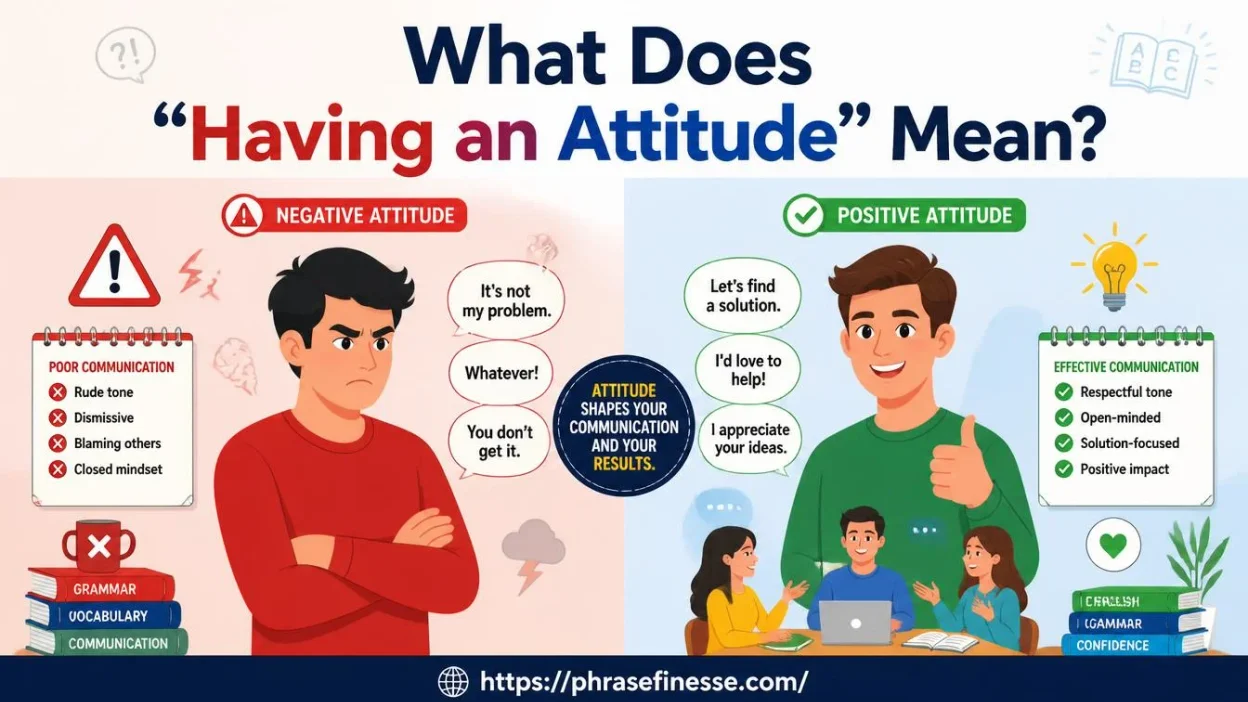
In English, calling somebody someone with an attitude is a common occurrence, usually describing a negative way of responding to a situation.What Does “Having an Attitude” Mean? It can be an umbrella term for many things, both positive and negative, but people often use the saying when they complain, refuse to learn, or act as if something is wrong. The article can explore how this phrase is painted in a negative light.
From my experience, the phrase often describes how people handle pressures, challenges, and other people, rather than simply describing someone’s mood.
The idea becomes clearer through Fritz Seyferth, Bo Schembechler, and the University of Michigan. As the new head football coach, Bo challenged his football players to consider their kind of attitude and whether they were eager to learn and become part of something bigger than yourself.
Instead of choosing to do nothing but complain, he encouraged taking responsibility and responsibility for our attitude. This meant looking beyond school, coaches, teammates, and social life and considering personal choices.
The lesson also connects with great leaders, leadership, teams, and working toward shared peak performances and new shared peak performances. Leading teams requires understanding the concept that your attitude can influence others and help create something bigger than yourself.
What Does “Having an Attitude” Mean?
The phrase “having an attitude” means showing a particular way of thinking, feeling, or behaving toward someone or something.
The word attitude itself refers to a person’s mindset, feelings, opinions, or emotional approach. It describes how someone views a situation and how they express that view.
For example:
- A student who says, “I don’t care what the teacher says,” while ignoring instructions may be described as having an attitude.
- An employee who refuses feedback and responds defensively may appear to have a bad attitude.
- An athlete who stays focused and confident before a competition may have a winning attitude.
In everyday English, though, the phrase is often used negatively.
When someone says:
“She’s having an attitude today.”
They usually mean:
- She is acting irritated.
- She is being disrespectful.
- She is responding negatively.
- She seems unwilling to cooperate.
The meaning depends heavily on context, tone, and behavior.
The Meaning of “Having an Attitude” in Everyday Conversation
In casual conversations, having an attitude often describes behavior that feels unpleasant or challenging.
People usually use this phrase when someone’s actions create tension.
Common examples include:
- Giving short, unfriendly answers
- Speaking in a sarcastic tone
- Ignoring requests
- Complaining constantly
- Acting superior
- Refusing to listen
- Showing impatience
For example:
1.Person A: “Can you help me with this project?”
2.Person B: “Obviously, I’m the only one who knows how to do anything around here.”
3.Person B’s response may be described as having an attitude because the tone sounds negative and disrespectful.
However, the phrase does not always mean someone is intentionally rude. Sometimes people appear to have an attitude because they are:
- Tired
- Stressed
- Frustrated
- Overwhelmed
- Misunderstood
This is why looking at the full situation matters.
Different Meanings of “Having an Attitude”
The phrase “having an attitude” can have both negative and positive meanings.
Negative Meaning: Having a Bad Attitude
This is the most common use of the phrase.
A person with a negative attitude may show:
- Disrespect
- Anger
- Defensiveness
- Arrogance
- Lack of cooperation
Examples:
- “He always has an attitude when someone gives him advice.”
- “The customer complained because the employee had an attitude.”
A bad attitude is usually connected to behavior that makes communication harder.
Common Signs of a Negative Attitude
| Behavior | Why People See It Negatively |
| Eye rolling | Shows annoyance or disrespect |
| Sarcasm | Can make others feel attacked |
| Interrupting | Suggests a lack of listening |
| Complaining constantly | Creates negativity |
| Refusing feedback | Appears defensive |
| Ignoring others | Can seem disrespectful |
Positive Meaning: Having a Good Attitude
Although people often use the phrase negatively, attitude itself is not a bad thing.
A positive attitude describes a helpful and constructive mindset.
Examples include:
- Staying optimistic during challenges
- Showing confidence
- Being willing to learn
- Treating others respectfully
- Finding solutions instead of focusing only on problems
For example:
“Maria has a great attitude at work because she stays positive and helps her team.”
Here, attitude means personality, mindset, and approach rather than disrespect.
Examples of Positive Attitudes
| Type of Attitude | Meaning |
| Positive attitude | Looking for opportunities and solutions |
| Professional attitude | Acting responsibly and respectfully |
| Winning attitude | Staying motivated and determined |
| Growth attitude | Being open to learning and improvement |
| Helpful attitude | Supporting others |
Why Do People Say “You Have an Attitude”?
When someone says “You have an attitude,” they are usually reacting to something they noticed.
That reaction may come from your:
- Words
- Tone of voice
- Facial expressions
- Body language
- Emotional reactions
Let’s look at the most common reasons.
You May Seem Defensive
One major reason people say someone has an attitude is because they appear defensive.
Defensive behavior happens when someone feels criticized, blamed, or challenged.
Examples:
- Making excuses immediately
- Refusing to accept responsibility
- Becoming argumentative
- Turning criticism into an argument
Example:
Manager: “This report needs more details.”
Employee: “Well, nobody told me exactly what you wanted, so it’s not my fault.”
The employee may feel misunderstood, but the response can appear defensive.
A calmer response could be:
“I understand. Can you tell me which areas need more information?”
This keeps the conversation productive.
Your Tone Sounds Negative
Communication is not only about the words you use. The way you say something matters just as much.
The same sentence can have completely different meanings depending on tone.
Example:
“Sure, whatever.”
It can sound:
- Neutral: agreeing without much interest
- Negative: dismissive or annoyed
People often interpret attitude through:
- Voice volume
- Speed of speaking
- Facial expression
- Body language
A person may not realize their tone sounds rude, which is why self-awareness is important.
You Are Showing Disrespect
Another reason people use the phrase “having an attitude” is because they feel disrespected.
Examples of disrespectful behaviors:
- Talking back aggressively
- Ignoring someone intentionally
- Laughing at someone’s opinion
- Refusing to cooperate
- Acting like rules do not apply
For example:
A student who says:
“I don’t care what you say.”
to a teacher may be described as having an attitude because the statement shows disrespect.
Examples of “Having an Attitude” in Different Situations
The meaning of having an attitude changes depending on where it happens.
Having an Attitude at Work
The workplace requires cooperation, communication, and professionalism.
Someone may appear to have an attitude if they:
- Reject every suggestion
- Complain about every task
- Treat coworkers disrespectfully
- Respond poorly to feedback
- Avoid teamwork
Workplace Example
Imagine a team meeting where a manager suggests improving a process.
Employee A says:
“That sounds like a waste of time. We’ve always done it this way.”
Employee A may have valuable concerns, but the dismissive tone creates the impression of a negative attitude.
A better approach:
“I have some concerns about this change. Could we discuss how it will improve the process?”
The message stays respectful while still expressing disagreement.
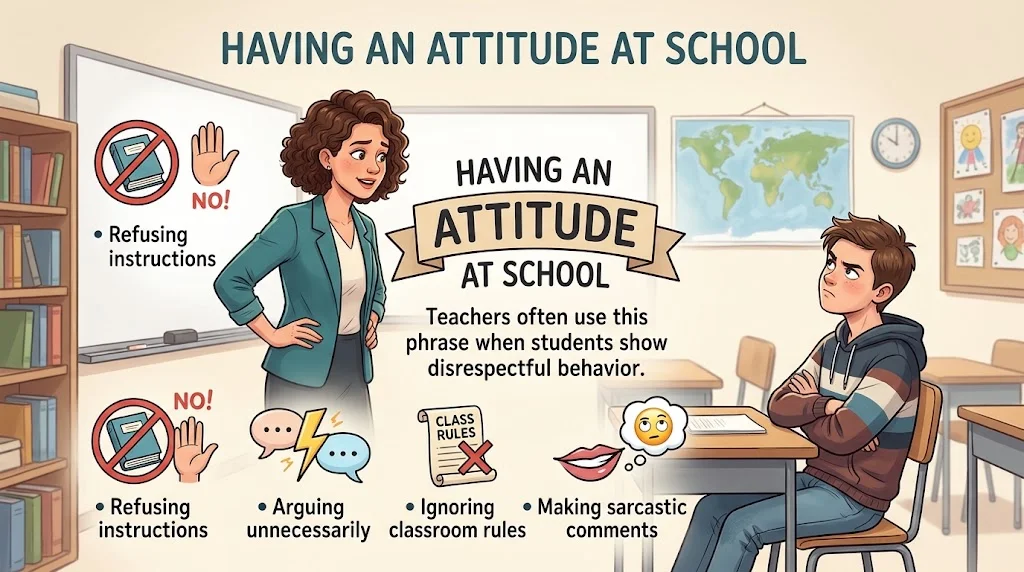
Having an Attitude at School
Teachers often use the phrase when students show disrespectful behavior.
Examples include:
- Refusing instructions
- Arguing unnecessarily
- Ignoring classroom rules
- Making sarcastic comments
However, students may sometimes appear to have an attitude because they are:
- Confused
- Embarrassed
- Frustrated
- Struggling academically
Good communication helps identify the real issue.
Having an Attitude in Relationships
Relationships depend on emotional awareness and respectful communication.
A person may seem to have an attitude when they:
- Give the silent treatment
- Respond sarcastically
- Avoid conversations
- Act irritated without explaining why
Example:
Partner A:
“Are you upset?”
Partner B:
“No, I’m fine.”
while showing obvious frustration.
This creates confusion because the words and body language do not match.
Read More : Become or Became? Difference With Examples
What Does “Having an Attitude” Mean? Definition, Examples, Signs, and How to Respond
Recognizing signs of having an attitude can help you understand why certain conversations become difficult. An attitude is not always obvious because people express emotions differently.
Some people show attitude through words, while others communicate it through body language or actions.
Here are common signs that someone may appear to have a negative attitude.
Verbal Signs of a Bad Attitude
The words someone chooses can reveal their emotional state.
Common verbal signs include:
Giving Short or Rude Answers
A person who normally communicates openly may suddenly give cold responses.
Examples:
- “Whatever.”
- “I don’t care.”
- “Do what you want.”
- “Obviously.”
These phrases are not always rude by themselves, but the tone behind them often creates the impression of a negative attitude.
Using Sarcasm Frequently
Sarcasm can be funny when used appropriately, but repeated sarcasm can make communication uncomfortable.
Example:
Someone asks:
“Can you help me finish this task?”
A sarcastic response:
“Sure, because apparently I have nothing else to do.”
The person may be joking, frustrated, or overwhelmed. However, the response can sound disrespectful.
Constant Complaining
A person who focuses only on problems may appear to have a negative attitude.
Examples:
- Complaining about every suggestion
- Finding faults in every situation
- Refusing to look for solutions
A constructive person may say:
“This could be difficult, but let’s find a way to make it work.”
A negative attitude often sounds like:
“This will never work.”
Nonverbal Signs of Having an Attitude
Communication is not only about words. Body language strongly influences how people interpret behavior.
Common nonverbal signs include:
| Body Language | Possible Interpretation |
| Eye rolling | Annoyance or disrespect |
| Crossed arms | Defensiveness or resistance |
| Heavy sighing | Frustration or impatience |
| Avoiding eye contact | Disinterest or discomfort |
| Walking away | Avoiding communication |
| Ignoring someone | Lack of respect |
However, it is important not to judge someone based on one action alone.
For example, crossed arms could mean someone is defensive, but they could also simply feel cold or uncomfortable.
Context matters.
Difference Between Having an Attitude and Having a Personality
Many people confuse attitude with personality, but they are different.
Your personality describes your long-term characteristics. Your attitude describes your current feelings, mindset, or approach toward a situation.
A person’s attitude can change from day to day, while personality tends to remain more consistent.
Attitude vs Personality
| Attitude | Personality |
| Temporary way of responding | Long-term characteristics |
| Connected to emotions and situations | Connected to identity and traits |
| Can change quickly | Develops over time |
| Shown through behavior | Describes who someone is |
Example:
Imagine someone named Sarah.
Sarah is usually:
- Friendly
- Helpful
- Patient
These qualities describe her personality.
One stressful morning, she becomes impatient and responds rudely to coworkers.
That moment reflects her attitude, not necessarily her personality.
A person can have a bad attitude without being a bad person.
Difference Between Attitude, Behavior, and Mindset
Although these words are related, they describe different things.
Understanding the difference helps you use them correctly.
What Is Attitude?
Attitude refers to your feelings, opinions, and emotional approach toward something.
Examples:
- Positive attitude toward learning
- Negative attitude toward change
- Professional attitude at work
Sentence example:
“James has a positive attitude toward solving problems.”
What Is Behavior?
Behavior refers to the actions other people can observe.
Examples:
- Speaking politely
- Helping others
- Ignoring instructions
- Interrupting conversations
Sentence example:
“Her behavior during the meeting was disrespectful.”
What Is Mindset?
Mindset refers to your general way of thinking.
It influences how you view challenges, success, and failure.
Examples:
- Growth mindset
- Fixed mindset
- Success mindset
Sentence example:
“A growth mindset helps people learn from mistakes.”
Attitude vs Behavior vs Mindset Table
| Term | Meaning | Example |
| Attitude | Emotional approach or opinion | Positive attitude |
| Behavior | Visible actions | Respectful behavior |
| Mindset | Pattern of thinking | Growth mindset |
These three ideas are connected.
Your mindset influences your attitude, and your attitude often affects your behavior.
Is Having an Attitude Always a Bad Thing?
No. The phrase “having an attitude” is often negative, but the word attitude itself can describe positive qualities.
A person with the right attitude can be:
- Confident
- Motivated
- Respectful
- Optimistic
- Determined
For example:
“The team won because they had the right attitude.”
Here, attitude means confidence and commitment.
Examples of Positive Attitudes
Confidence
A confident attitude helps people believe in their abilities.
Example:
“She approached the interview with a confident attitude.”
Determination
A determined attitude helps people continue despite challenges.
Example:
“His positive attitude helped him overcome difficulties.”
Professionalism
A professional attitude includes:
- Respect
- Responsibility
- Reliability
- Cooperation
Employers often value attitude because skills can improve, but a negative mindset can affect teamwork.
How to Respond When Someone Says “You Have an Attitude”
Hearing someone say “You have an attitude” can feel like criticism. The best response depends on the situation.
Instead of immediately becoming defensive, try to understand what the person means.
Stay Calm
An emotional reaction can make the situation worse.
Instead of saying:
“No, I don’t!”
Try:
“I didn’t realize I came across that way. Can you explain what bothered you?”
This keeps the conversation open.
Ask for Specific Feedback
The phrase can sometimes be unclear.
Ask questions like:
- “What did I say that seemed disrespectful?”
- “Was it my tone or my words?”
- “How could I handle it differently?”
Specific feedback helps you improve.
Consider Their Perspective
Sometimes people notice behaviors that you do not notice yourself.
Think about:
- Was my tone harsh?
- Did I interrupt?
- Did I listen properly?
- Did I respond emotionally?
Self-awareness improves communication.
How to Stop Having a Bad Attitude
A negative attitude can affect relationships, work performance, and personal growth.
The good news is that attitudes can change.
Here are practical ways to develop a better attitude.
Practice Better Communication
Good communication starts with listening.
Helpful habits include:
- Listen before responding
- Avoid interrupting
- Choose respectful words
- Explain your feelings calmly
Instead of:
“That idea is terrible.”
Try:
“I see some challenges with this idea. Can we discuss possible solutions?”
The second response communicates disagreement without disrespect.
Manage Emotional Reactions
Strong emotions can influence your attitude.
Before reacting:
- Pause for a moment
- Identify what you are feeling
- Think about your response
- Choose your words carefully
For example:
You receive criticism at work.
Immediate reaction:
“You always criticize me.”
Better response:
“I appreciate the feedback. Can you explain what I should improve?”
Focus on Solutions Instead of Problems
People with a positive attitude do not ignore problems. They approach them differently.
Negative approach:
“This is impossible.”
Positive approach:
“This is challenging, but what options do we have?”
A solution-focused mindset improves teamwork and relationships.
Common Phrases Related to “Having an Attitude”
English speakers use many expressions connected to attitude.
| Phrase | Meaning | Example |
| Don’t give me attitude | Stop responding disrespectfully | “Don’t give me attitude when I’m helping you.” |
| Bad attitude | Negative behavior or mindset | “His bad attitude affected the team.” |
| Great attitude | Positive and cooperative behavior | “She has a great attitude at work.” |
| Check your attitude | Change your behavior | “You need to check your attitude.” |
| Lose the attitude | Stop acting negatively | “Lose the attitude and listen.” |
Common Mistakes When Understanding “Having an Attitude”
Many people believe attitude always has a negative meaning.
That is incorrect.
A person can have:
- A positive attitude
- A confident attitude
- A determined attitude
The meaning depends on context.
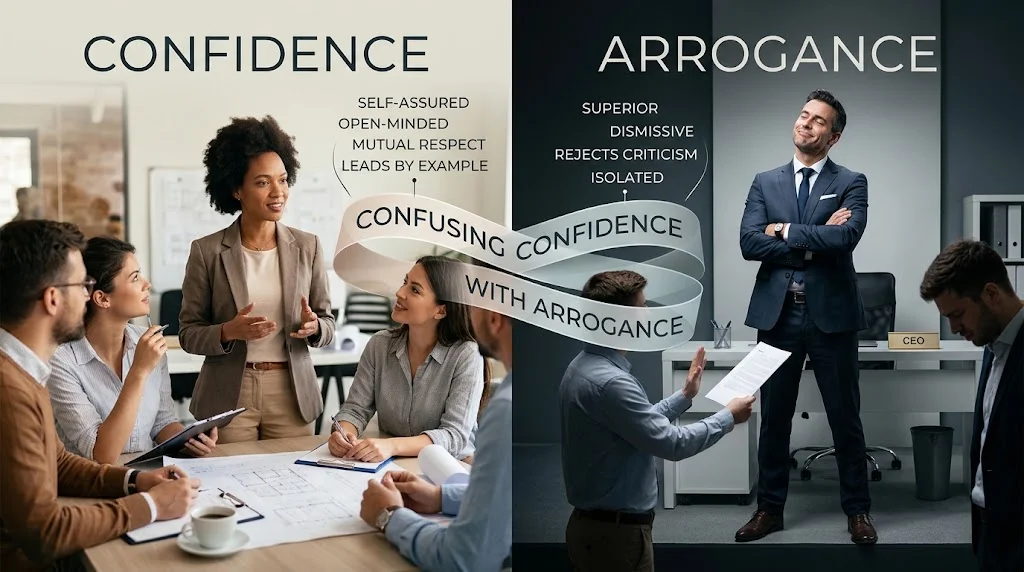
Confusing Confidence With Arrogance
Confidence and arrogance may look similar, but they are different.
Confidence:
- Believes in personal abilities
- Respects others
- Accepts feedback
Arrogance:
- Feels superior
- Dismisses others
- Refuses criticism
Example:
Confident:
“I believe I can complete this project.”
Arrogant:
“Nobody else can do this as well as I can.”
Judging Someone Without Understanding the Situation
A person’s behavior may be influenced by:
- Stress
- Personal problems
- Lack of sleep
- Pressure
- Miscommunication
One negative moment does not always represent someone’s true character.
FAQs
1. What does “having an attitude” mean?
“Having an attitude” usually means behaving in a negative, disrespectful, or uncooperative way. The exact meaning depends on the situation and the person’s behavior.
2. Is “having an attitude” always negative?
No. Attitude itself can be positive or negative. However, when someone says, “You have an attitude,” they usually mean that the person is acting negatively.
3. What is an example of having an attitude?
If someone responds rudely, refuses to cooperate, complains constantly, or acts disrespectfully, another person might say, “You’re having an attitude.”
4. Why do people say someone “has an attitude”?
People often use this expression when they notice a person’s tone, behavior, or response seems disrespectful, defensive, or unnecessarily negative.
5. Can having an attitude be a good thing?
Yes, depending on what “attitude” means in context. A positive attitude can show confidence, determination, enthusiasm, and willingness to handle challenges.
6. Is “having an attitude” the same as being angry?
Not necessarily. Someone can have an attitude without being angry. The phrase can describe rudeness, impatience, sarcasm, defiance, or negativity.
Conclusion
“Having an attitude” is a common English expression that usually refers to someone’s negative behavior, tone, or response. While the word attitude can describe both positive and negative qualities, the phrase “you have an attitude” generally suggests that someone is being rude, disrespectful, impatient, defensive, or difficult to deal with.
The meaning can change slightly depending on the situation, but it often focuses on how a person responds to other people, problems, or challenges.
The deeper idea is that an attitude involves more than simply feeling angry or upset. It can affect how you communicate, handle pressure, respond to criticism, and work with others. A negative attitude may create tension, while a positive attitude can encourage cooperation and better relationships.
As the example involving Bo Schembechler shows, taking responsibility for your attitude can also influence your performance and the people around you. Ultimately, understanding what “having an attitude” means helps you recognize the difference between a temporary emotion and a consistent pattern of behavior.

Emma Brooke is an English language specialist, editor, and content writer at Phrase Finesse, where she helps readers develop stronger writing and communication skills through clear, practical, and engaging content. With a passion for the English language, she specializes in simplifying grammar rules, vocabulary, spelling, punctuation, and word usage for learners at every level.
Emma has extensive experience creating educational content that is accurate, well-researched, and easy to understand. She is particularly skilled at explaining confusing word pairs, grammar concepts, idioms, sentence structure, and effective writing techniques, making complex topics approachable for students, professionals, educators, and English learners worldwide.