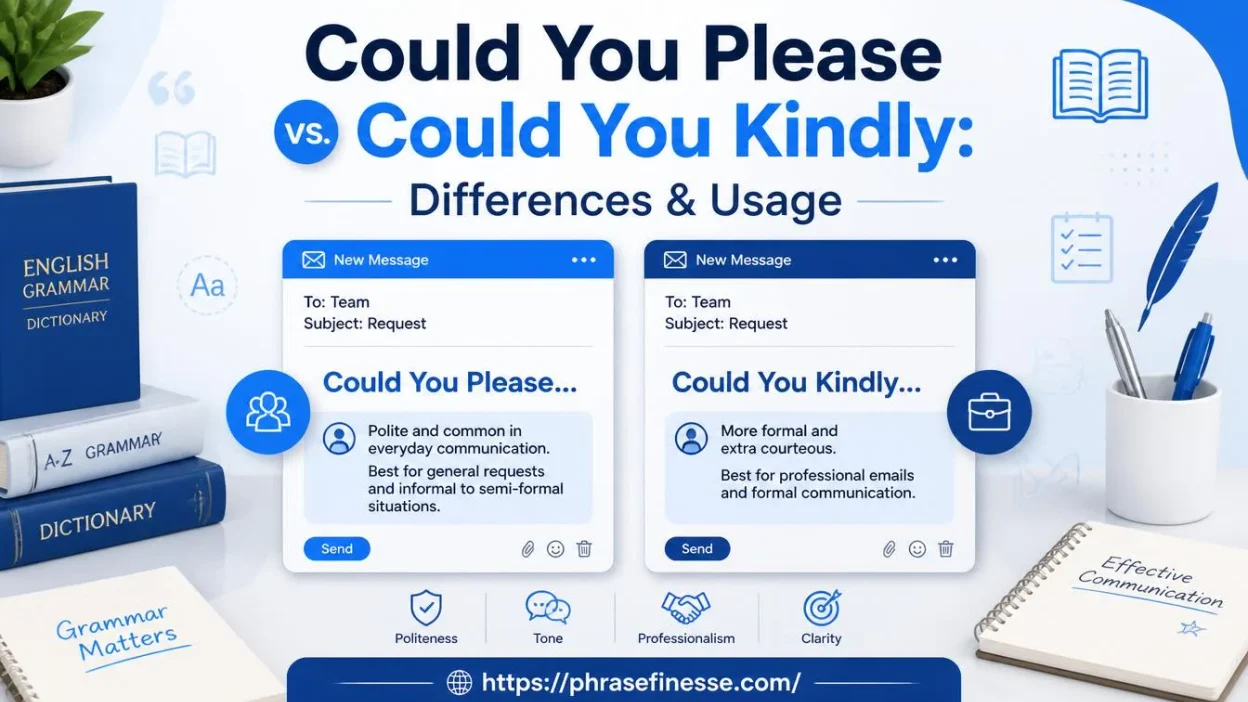
Have you ever wondered whether Could You Please vs. Could You Kindly: Differences & Usage sounds more natural in a professional email or everyday conversation? Although both expressions are polite, they create slightly different tones depending on the situation.
Choosing the right phrase can improve business communication, strengthen formal writing, and make your English usage sound more confident and appropriate.
In this guide, you’ll discover the subtle differences between these common polite requests, when each expression works best, and which alternatives fit different contexts. Whether you’re writing emails, arranging meetings, managing a calendar, handling scheduling, improving time management, coordinating project management tasks, or responding to online booking requests, selecting the right wording helps you communicate with greater consistency and professionalism.
You’ll also learn how these phrases appear in everyday conversations and even in broadcasting or customer service settings.
By the end of this article, you’ll know exactly when to use “Could you please”, when “Could you kindly” is the better choice, and how to replace both with natural, modern alternatives.
With practical examples, grammar explanations, and real-world scenarios, this guide will help you write more politely, avoid common mistakes, and communicate with clarity in both personal and professional situations.
What Does “Could You Please” Mean?
The phrase “could you please” is a polite way to ask someone to do something.
The modal verb could softens the request and makes it sound less demanding than can. The addition of please further increases politeness.
Definition
Could you please means:
“Would you be willing to do this for me?”
It expresses courtesy while allowing the listener the freedom to comply.
Why It Sounds Polite
English speakers often soften requests rather than giving direct commands.
Compare these examples:
| Direct Command | Polite Request |
| Send the report. | Could you please send the report? |
| Call me tomorrow. | Could you please call me tomorrow? |
| Close the door. | Could you please close the door? |
The second version feels friendlier because it respects the listener’s autonomy.
When People Use “Could You Please”
You’ll find this phrase almost everywhere.
In Professional Communication
- Requesting information
- Asking for updates
- Delegating tasks
- Following up on projects
Example:
Could you please send the revised proposal by Friday?
In Customer Service
Businesses frequently use this phrase because it sounds professional without being overly formal.
Example:
Could you please provide your order number?
In Everyday Conversations
Friends and family use it regularly.
Example:
Could you please pass the salt?
In Educational Settings
Teachers and students often use it to maintain respect.
Example:
Could you please explain that concept again?
Examples of “Could You Please” in Sentences
Professional Examples
- Could you please review the attached document?
- Could you please confirm your availability for the meeting?
- Could you please provide an update on the project?
Casual Examples
- Could you please turn down the music?
- Could you please help me carry these boxes?
- Could you please watch the dog for an hour?
Email Examples
- Could you please send the invoice at your earliest convenience?
- Could you please clarify the requirements for this assignment?
- Could you please let me know if any changes are needed?
What Does “Could You Kindly” Mean?
The phrase “could you kindly” serves the same basic purpose as could you please. It is also used to make polite requests.
However, it often sounds more formal, official, or traditional.
Definition
Could you kindly means:
“Would you be kind enough to do this?”
The word kindly emphasizes the listener’s kindness or cooperation.
Why “Kindly” Feels Different
Although kindly originally carried warm and courteous connotations, modern English speakers sometimes interpret it differently.
Depending on context, it may sound:
- Formal
- Administrative
- Corporate
- Old-fashioned
- Authoritative
For example:
Could you kindly submit the required documentation?
This sounds more official than:
Could you please submit the required documentation?
Both are polite. The difference lies in tone.
Common Situations Where “Could You Kindly” Is Used
Business Correspondence
Formal organizations often use it in letters and official emails.
Example:
Could you kindly acknowledge receipt of this message?
Government Communication
Administrative notices frequently contain this phrase.
Example:
Could you kindly complete the attached form?
Banking and Finance
Financial institutions often favor formal language.
Example:
Could you kindly verify your account details?
Customer Support
Some international support teams use it regularly.
Example:
Could you kindly provide a screenshot of the issue?
Examples of “Could You Kindly” in Sentences
Formal Workplace Examples
- Could you kindly review the agreement?
- Could you kindly confirm receipt?
- Could you kindly update the records?
Administrative Examples
- Could you kindly complete the registration process?
- Could you kindly provide supporting documentation?
Service-Related Examples
- Could you kindly share your booking reference?
- Could you kindly verify your identity?
Could You Please vs. Could You Kindly: Key Differences
Both phrases are grammatically correct. The real difference lies in tone, frequency, and perception.
Side-by-Side Comparison
| Feature | Could You Please | Could You Kindly |
| Formality | Moderate | Higher |
| Tone | Friendly | Formal |
| Everyday Use | Very common | Less common |
| Business Emails | Common | Common in formal settings |
| Spoken English | Extremely common | Less common |
| Modern Usage | Preferred | Context-dependent |
| International Business | Widely accepted | Often used in official communication |
Difference in Tone
Tone matters more than grammar.
Could You Please
Sounds:
- Friendly
- Conversational
- Natural
- Modern
Example:
Could you please send me the latest report?
Could You Kindly
Sounds:
- Formal
- Structured
- Official
Example:
Could you kindly send me the latest report?
The request itself is identical. The emotional impact differs.
Difference in Perceived Politeness
A common misconception is that kindly is more polite than please.
In reality, politeness depends on:
- Context
- Relationship
- Delivery
- Word choice
Consider these examples:
Polite
Could you please help me with this?
Less Polite Despite “Kindly”
Could you kindly stop making mistakes?
The second sentence may sound passive-aggressive despite containing “kindly.”
This shows that wording alone does not determine politeness.
See More :Thank You For Everything: Meaning, Usage, and Alternatives
Difference in Modern Usage
Modern business communication favors clarity and simplicity.
As a result, many organizations prefer:
- Please
- Thank you
- Appreciate
- Would you mind
over excessive formal language.
Today, could you please appears more frequently in modern workplace communication than could you kindly.
Is “Could You Kindly” Too Formal?
Not necessarily.
However, context matters.
Why It Can Feel Formal
The phrase appears frequently in:
- Legal correspondence
- Official notices
- Corporate policies
- Administrative documents
Because of this exposure, many readers associate it with bureaucracy.
When It Sounds Stiff
Imagine sending a message to a coworker:
Could you kindly send me the meeting notes?
It sounds fine.
But many modern professionals would naturally write:
Could you please send me the meeting notes?
The second version feels more conversational.
When It Still Works Well
“Kindly” remains effective in:
- Formal requests
- International business
- Institutional communication
- Customer support environments
Example:
Could you kindly provide additional identification documents?
This sounds professional and appropriate.
Is “Could You Please” Always the Better Choice?
In many situations, yes.
But not all.
Advantages of “Could You Please”
- Natural
- Widely understood
- Friendly
- Professional
- Suitable across cultures
Because of its flexibility, it has become the default choice for many English speakers.
Situations Where Another Phrase Works Better
Sometimes variety improves communication.
Instead of repeatedly writing:
Could you please…
You might use:
- Would you mind…
- I’d appreciate it if you could…
- When you have a moment…
- Could I ask you to…
This keeps communication fresh and natural.
British vs. American English Usage
Regional preferences influence language choices.
American English
American speakers generally prefer:
- Could you please…
- Can you please…
- Would you mind…
These phrases dominate both spoken and written communication.
British English
British English accepts both expressions.
However, please still appears more frequently in daily conversation.

International Business English
Global organizations often choose wording that non-native speakers easily understand.
Because of this, could you please is usually the safest option.
It is straightforward and universally recognized.
Professional Email Examples
Email communication offers the clearest comparison between these phrases.
Requesting Information
Using “Could You Please”
Could you please share the sales figures for last quarter?
Using “Could You Kindly”
Could you kindly share the sales figures for last quarter?
Both work. The first feels more conversational.
Requesting Documents
Could You Please
Could you please send the signed contract?
Could You Kindly
Could you kindly send the signed contract?
Again, the difference is tone rather than meaning.
Following Up
Could You Please
Could you please provide an update when convenient?
Could You Kindly
Could you kindly provide an update regarding the matter?
The second sounds more formal and structured.
Case Study: How Word Choice Affects Email Responses
A customer support team tested two email templates.
Version A
Could you please provide your account number?
Version B
Could you kindly provide your account number?
Results showed that recipients viewed both messages as polite.
However:
- Version A felt friendlier.
- Version B felt more official.
- Response rates remained nearly identical.
The lesson?
Tone perception changed. Compliance did not.
Common Mistakes to Avoid
Even polite phrases can create problems when misused.
Using “Could You Kindly Please”
Example:
Could you kindly please review the document?
This is grammatically acceptable.
However, it sounds redundant.
Both words serve a similar function.
Choose one.
Better:
Could you please review the document?
or
Could you kindly review the document?
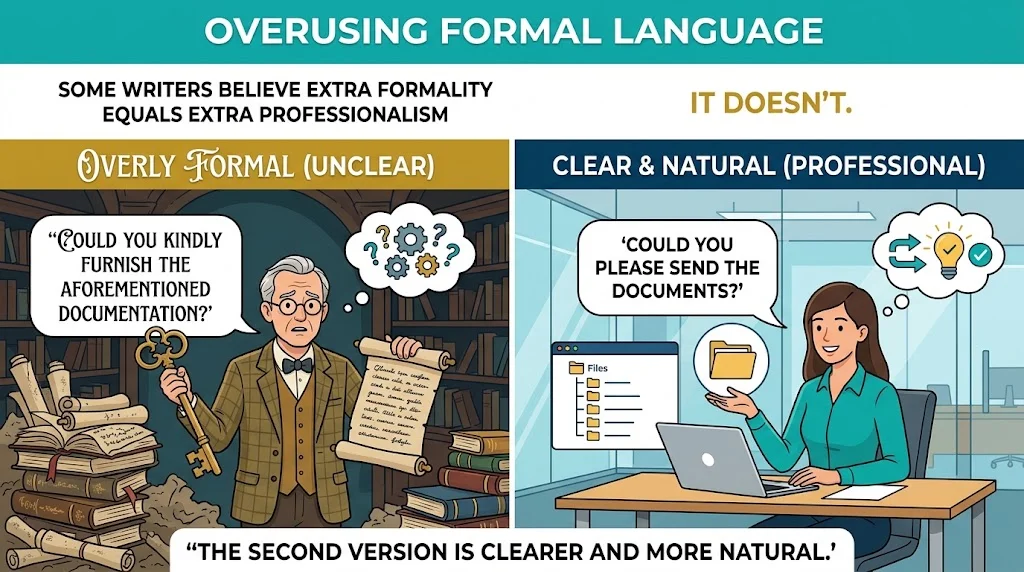
Overusing Formal Language
Some writers believe extra formality equals extra professionalism.
It doesn’t.
Compare:
Could you kindly furnish the aforementioned documentation?
vs.
Could you please send the documents?
The second version is clearer and more natural.
Ignoring Context
Language should match the audience.
A message to your manager differs from a message to your best friend.
Choosing the wrong level of formality can make communication feel awkward.
Better Alternatives to “Could You Please” and “Could You Kindly”
Sometimes another phrase fits better.
Professional Alternatives
Would You Mind…?
Example:
Would you mind reviewing this report?
Would You Be Able To…?
Example:
Would you be able to join tomorrow’s meeting?
I’d Appreciate It If You Could…
Example:
I’d appreciate it if you could send the updated figures.
Could I Ask You To…?
Example:
Could I ask you to verify these details?

Friendly Alternatives
- Can you help me with this?
- When you have a moment…
- Would you mind helping me?
- Could you give me a hand?
These expressions feel approachable and warm.
Highly Formal Alternatives
I Would Be Grateful If You Could…
Example:
I would be grateful if you could review the proposal.
May I Request That You…
Example:
May I request that you complete the attached form?
Would You Be So Kind As To…
Example:
Would you be so kind as to provide clarification?
These work best in formal correspondence.
Alternative Comparison Table
| Phrase | Formality | Best Use |
| Could you please | Medium | Everyday requests |
| Could you kindly | Medium-High | Formal requests |
| Would you mind | Medium | Collaborative communication |
| I’d appreciate it if you could | Medium | Professional emails |
| May I request that you | High | Official correspondence |
| Would you be so kind as to | Very High | Formal letters |
Which Phrase Should You Use?
The answer depends on your audience and objective.
Use “Could You Please” When
- Writing routine emails
- Communicating with coworkers
- Speaking with customers
- Making everyday requests
- Seeking a friendly tone
Example:
Could you please review the presentation before noon?
Use “Could You Kindly” When
- Contacting institutions
- Sending formal requests
- Writing administrative emails
- Communicating official procedures
Example:
Could you kindly submit the required documentation by Friday?
Expert Insight: Why “Please” Dominates Modern English
Language evolves.
Business communication today prioritizes:
- Clarity
- Brevity
- Accessibility
- Human connection
Because of these trends, please has become the dominant choice.
It communicates respect without sounding overly formal.
As workplace communication grows more conversational, many companies encourage employees to write the way people actually speak.
That shift explains why “could you please” continues to gain popularity while “could you kindly” remains more specialized.
FAQs
1. Is “Could you please” more polite than “Could you kindly”?
Not necessarily. Both are polite expressions. However, “Could you please” sounds more natural in modern English, while “Could you kindly” often feels more formal or traditional.
2. Can I use “Could you kindly” in business emails?
Yes. “Could you kindly” is appropriate for professional emails, official requests, and customer service messages. Just avoid overusing it, as it may sound overly formal in casual workplace communication.
3. Which phrase is more common in everyday conversation?
“Could you please” is much more common in daily conversations because it sounds friendly, natural, and conversational.
4. Are “Could you please” and “Would you please” interchangeable?
In many situations, yes. Both are polite requests. However, “Would you please” can sound slightly more direct, while “Could you please” focuses on the listener’s ability or willingness to help.
5. What are some good alternatives to “Could you please”?
You can use alternatives such as “Would you mind…?”, “Can you…?”, “I’d appreciate it if you could…”, “Would it be possible to…?”, or “May I ask you to…?”, depending on the level of formality.
6. Is “Could you kindly” old-fashioned?
Not exactly. The phrase is still correct and widely understood, but many native English speakers prefer “Could you please” because it sounds more modern and conversational in most situations.
Conclusion
Understanding the difference between “Could You Please” and “Could You Kindly” can make your communication more natural, polite, and effective.
While both expressions are grammatically correct, “Could you please” is generally more common in everyday English usage, whereas “Could you kindly” often sounds more formal or traditional, especially in business communication and professional correspondence.
The best choice depends on your audience, tone, and purpose. Whether you’re writing emails, requesting assistance, organizing meetings, handling scheduling, or communicating in a professional setting, selecting the right phrase helps create a positive impression.
If you want even more variety, using suitable alternatives can make your writing sound fresh while maintaining politeness and consistency. With the examples and tips in this guide, you’ll be able to choose the most appropriate expression with confidence.

Emma Brooke is an English language specialist, editor, and content writer at Phrase Finesse, where she helps readers develop stronger writing and communication skills through clear, practical, and engaging content. With a passion for the English language, she specializes in simplifying grammar rules, vocabulary, spelling, punctuation, and word usage for learners at every level.
Emma has extensive experience creating educational content that is accurate, well-researched, and easy to understand. She is particularly skilled at explaining confusing word pairs, grammar concepts, idioms, sentence structure, and effective writing techniques, making complex topics approachable for students, professionals, educators, and English learners worldwide.


[…] See More: Could You Please vs. Could You Kindly: Differences & Usage […]