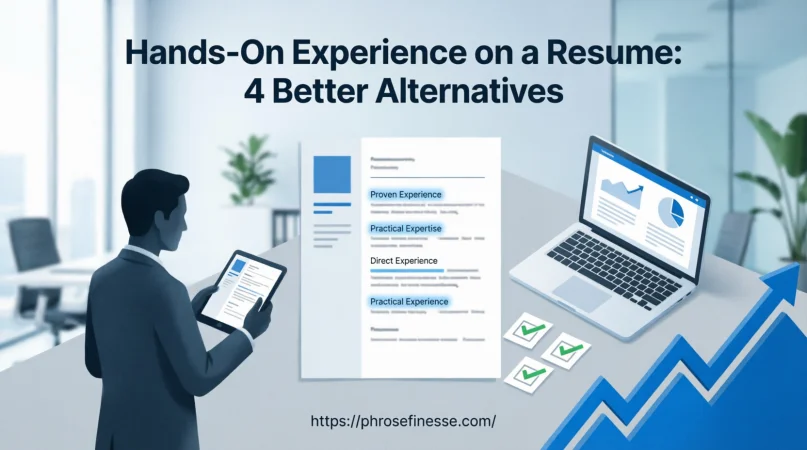
Have you ever wondered whether the phraseHands-On Experience on a Resume: 4 Better Alternatives truly highlights your skills in a competitive job market? While hands-on experience is a common resume phrase, recruiters often look for more specific and impactful language that demonstrates your practical skills, real-world knowledge, and ability to deliver results.
Choosing stronger wording can improve your professional communication, showcase your expertise, and make your resume writing more effective.
Your choice of words matters in formal writing, especially when creating a resume that reflects your qualifications and career achievements. This article explores four powerful alternatives to “hands-on experience” that can better communicate your background, whether you gained skills through project management, workplace training, internships, or direct involvement in professional tasks.
We’ll also explain how proper English usage, grammar, and consistency can strengthen your resume language and create a more polished impression.
Beyond resumes, clear and precise wording plays an important role in modern business communication, from meetings and scheduling to time management, online booking, broadcasting, and managing a professional calendar.
By understanding the best alternatives to “hands-on experience,” you can improve your career documents, communicate your abilities with confidence, and choose phrases that align with current expectations for clear, authentic, and valuable content.
What Does “Hands-On Experience” Mean?
The phrase hands-on experience refers to practical knowledge gained through direct participation in a task, project, or job function.
Unlike theoretical learning, hands-on experience involves actually performing the work.
For example:
- Operating machinery
- Managing projects
- Writing software code
- Serving customers
- Conducting financial analysis
- Running marketing campaigns
Someone with hands-on experience has learned through action rather than observation.
Example
A student may study programming concepts in a classroom.
A software developer with hands-on experience has built applications, fixed bugs, tested code, and worked with development teams.
That distinction matters because employers generally value practical experience.
Why Job Seekers Use “Hands-On Experience”
The phrase remains popular because it quickly communicates that a candidate has worked directly with specific tasks or technologies.
People often use it to:
- Highlight practical skills
- Demonstrate familiarity with tools
- Show real-world involvement
- Distinguish themselves from beginners
- Emphasize workplace experience
For example:
- Hands-on experience with Salesforce
- Hands-on experience managing budgets
- Hands-on experience with customer service
- Hands-on experience using Excel
While these statements aren’t technically wrong, they don’t tell recruiters much.
A hiring manager may immediately wonder:
- How much experience?
- What level of responsibility?
- What results were achieved?
- What specific skills were applied?
Those unanswered questions weaken the statement.
Why “Hands-On Experience” Can Hurt Your Resume
Many candidates assume that adding professional-sounding phrases automatically strengthens a resume.
In reality, vague language often has the opposite effect.
Recruiters prefer specifics.
Consider the difference:
Weak Statement
Hands-on experience with digital marketing.
Strong Statement
Managed paid advertising campaigns that generated 2,500 qualified leads and reduced acquisition costs by 18%.
The second statement immediately provides:
- Context
- Responsibility
- Skill
- Results
It paints a clear picture.
The first statement leaves too much to the imagination.
What Hiring Managers Actually Want to See
Hiring managers don’t simply want proof that you’ve performed a task.
They want evidence that you performed it successfully.
That means showing:
- Responsibilities
- Achievements
- Measurable outcomes
- Business impact
- Leadership contributions
Think of your resume as a highlight reel rather than a job description.
Telling vs Showing
| Telling | Showing |
| Hands-on experience with customer service | Resolved 75+ customer inquiries daily while maintaining a 97% satisfaction score |
| Hands-on experience in sales | Generated $450,000 in annual revenue through consultative selling |
| Hands-on experience with project management | Led cross-functional projects delivered 15% under budget |
| Hands-on experience in accounting | Managed monthly reconciliations for accounts totaling $8 million |
| Hands-on experience with software development | Developed web applications used by 20,000+ monthly users |
Showing beats telling every time.
Better Alternatives to Hands-On Experience
If you still want a replacement phrase, several options sound stronger and more professional.
Let’s examine the best alternatives.
Practical Experience
Practical experience is one of the closest substitutes for hands-on experience.
It emphasizes real-world application while sounding slightly more polished.
Why It Works
The word practical immediately suggests usable skills rather than theoretical knowledge.
Employers appreciate candidates who can contribute immediately.
Examples
- Practical experience managing customer relationships
- Practical experience operating manufacturing equipment
- Practical experience conducting financial audits
- Practical experience implementing cybersecurity measures
Best Uses
Practical experience works particularly well for:
- Entry-level professionals
- Technical positions
- Trade careers
- Internship applications
Example Upgrade
Instead of:
Hands-on experience using inventory software
Use:
Practical experience managing inventory systems across multiple warehouse locations
This version sounds more deliberate and professional.
Direct Experience
Another excellent alternative is direct experience.
This phrase emphasizes personal involvement and ownership.
Why It Works
Direct experience tells employers that you personally performed the work rather than supporting someone else.
It signals accountability.
Examples
- Direct experience managing remote teams
- Direct experience negotiating vendor contracts
- Direct experience developing mobile applications
- Direct experience implementing CRM systems
Ideal Situations
This phrase works especially well when:
- Applying for management roles
- Highlighting specialized expertise
- Demonstrating leadership responsibilities
- Showing industry-specific knowledge
Example Upgrade
Instead of:
Hands-on experience coordinating projects
Use:
Direct experience leading project teams through planning, execution, and delivery phases
The statement feels stronger because it emphasizes leadership.
Practical Expertise
For mid-level and senior professionals, practical expertise can be even more powerful.
Why It Works
Expertise suggests mastery.
It indicates that your experience goes beyond basic familiarity.
However, use this phrase honestly.
Recruiters expect supporting evidence.
Examples
- Practical expertise in cloud computing infrastructure
- Practical expertise in data analytics
- Practical expertise in manufacturing operations
- Practical expertise in regulatory compliance
Strong Resume Example
Instead of:
Hands-on experience with cybersecurity
Use:
Practical expertise implementing enterprise cybersecurity frameworks that reduced security incidents by 32%
Now you’re combining expertise with measurable value.
Proven Experience
Among all alternatives, proven experience often delivers the strongest impact.
Why It Works
The word proven implies measurable success.
Employers care about results.
Proven experience suggests that your track record can be verified through outcomes.
Examples
- Proven experience increasing customer retention
- Proven experience leading organizational change
- Proven experience improving operational efficiency
- Proven experience driving sales growth
Example Upgrade
Instead of:
Hands-on experience in sales
Use:
Proven experience generating annual revenue growth exceeding 20%
The difference is dramatic.
One describes activity.
The other demonstrates success.
Why Achievement-Based Language Beats Every Alternative
Even the best replacement phrase has limitations.
The strongest resumes rarely rely on descriptors alone.
Instead, they focus on accomplishments.
The Best Resume Formula
Use:
Action Verb + Task + Result
This formula instantly creates stronger statements.
Examples
Weak
Hands-on experience with social media marketing.
Strong
Created social media campaigns that increased engagement by 42% within six months.
Weak
Hands-on experience managing employees.
Strong
Supervised a team of 15 employees and improved productivity by 18%.
Weak
Hands-on experience in accounting.
Strong
Reduced month-end closing time from 10 days to 6 days through process improvements.
Weak
Hands-on experience with inventory management.
Strong
Implemented inventory tracking procedures that reduced stock discrepancies by 25%.
Read More :Cobbler’s Children Have No Shoes: Meaning and Origin
Resume Language That Recruiters Love
Certain action verbs immediately create stronger impressions.
Consider using:
| Leadership | Technical | Analytical | Communication |
| Directed | Developed | Evaluated | Presented |
| Led | Engineered | Assessed | Negotiated |
| Managed | Implemented | Analyzed | Collaborated |
| Coordinated | Automated | Researched | Advised |
| Supervised | Configured | Forecasted | Facilitated |
These verbs communicate action and ownership.
Industry-Specific Alternatives to Hands-On Experience
Different industries require different approaches.
Let’s look at examples.
Information Technology
Technology employers value results, scalability, and technical impact.
Weak
Hands-on experience with network administration.
Better
Managed enterprise network infrastructure supporting 1,200 users.
Even Better
Optimized network performance and reduced downtime by 40%.
Marketing
Marketing is heavily performance-driven.
Weak
Hands-on experience creating content.
Better
Developed SEO-focused content strategies.
Strongest
Increased organic traffic by 65% through content optimization initiatives.
Finance
Numbers matter in finance.
Weak
Hands-on experience with budgeting.
Better
Managed departmental budgets exceeding $5 million annually.
Strongest
Reduced operational expenses by 12% while maintaining service quality.
Healthcare
Healthcare employers want measurable patient impact.
Weak
Hands-on experience providing patient care.
Better
Delivered patient care in a high-volume clinical setting.
Strongest
Supported treatment plans for 40+ patients daily while maintaining compliance standards.
Engineering
Engineering resumes benefit from tangible results.
Weak
Hands-on experience in product design.
Better
Designed mechanical systems for manufacturing applications.
Strongest
Reduced production costs by 15% through optimized component design.
Case Study: How Better Resume Language Increased Interview Requests
Consider two fictional candidates applying for the same project management role.
Candidate A
- Hands-on experience managing projects
- Hands-on experience leading teams
- Hands-on experience with budgeting
Candidate B
- Directed projects valued at $2 million from initiation through completion
- Led cross-functional teams of up to 20 employees
- Managed budgets while reducing project costs by 11%
Both candidates may possess similar qualifications.
However, Candidate B communicates value more effectively.
Most hiring managers would immediately prefer Candidate B because the achievements are easier to understand and verify.
This example highlights an important truth:
Specificity creates credibility.
Common Resume Mistakes Related to Hands-On Experience
Many job seekers unknowingly weaken their resumes.
Avoid these mistakes.
Using Generic Buzzwords
Examples include:
- Team player
- Go-getter
- Hard worker
- Results-oriented
- Self-starter
- Hands-on experience
These phrases are often overused and difficult to verify.
Failing to Quantify Achievements
Numbers make accomplishments believable.
Compare:
Improved customer satisfaction.
Versus:
Improved customer satisfaction from 82% to 95%.
The second statement carries significantly more weight.
Repeating the Same Phrase
If every bullet point starts with:
- Hands-on experience
- Responsible for
- Assisted with
Your resume becomes repetitive.
Use varied language.
Listing Duties Instead of Accomplishments
Many resumes simply describe job responsibilities.
Employers want results.
Instead of:
Responsible for inventory management.
Use:
Reduced inventory shortages by 30% through improved tracking procedures.
Using Weak Verbs
Avoid weak phrases like:
- Helped with
- Worked on
- Participated in
Replace them with:
- Led
- Managed
- Developed
- Improved
- Created
- Directed
Quick Comparison of Resume Phrases
| Phrase | Professionalism | Specificity | Impact |
| Hands-On Experience | Moderate | Low | Moderate |
| Practical Experience | Good | Moderate | Good |
| Direct Experience | Good | Moderate | Good |
| Practical Expertise | Very Good | High | Very Good |
| Proven Experience | Excellent | High | Excellent |
| Achievement-Based Statements | Excellent | Very High | Outstanding |
The table reveals a clear pattern.
Specificity always wins.
When You Can Still Use Hands-On Experience
Despite its limitations, the phrase isn’t always wrong.
There are situations where it remains useful.
ATS Optimization
Some employers include “hands-on experience” in job descriptions.
Mirroring relevant keywords can help Applicant Tracking Systems identify your resume as a match.
Supporting Context
The phrase can work when paired with measurable achievements.
Example:
Hands-on experience implementing ERP systems that improved reporting efficiency by 22%.
Now the statement contains evidence.
Early Career Professionals
Students and recent graduates sometimes lack measurable accomplishments.
In those situations, practical experience language may still provide value.
Best Practices for Writing a Stronger Resume
Follow these principles whenever you update your resume.
Focus on Results
Employers buy outcomes, not activities.
Show what happened because of your work.
Use Numbers Wherever Possible
Include:
- Revenue
- Cost savings
- Percentages
- Team sizes
- Budgets
- Customer counts
- Project values
Numbers add credibility.
Tailor Your Resume
Customize your language for each position.
Match the employer’s priorities.
Start Bullet Points With Strong Verbs
Examples include:
- Built
- Increased
- Improved
- Managed
- Directed
- Developed
- Generated
- Optimized
Strong verbs create stronger impressions.
Remove Unnecessary Filler
Every word should earn its place.
If a phrase doesn’t add value, remove it.
The Future of Resume Writing
Modern recruiting continues to evolve.
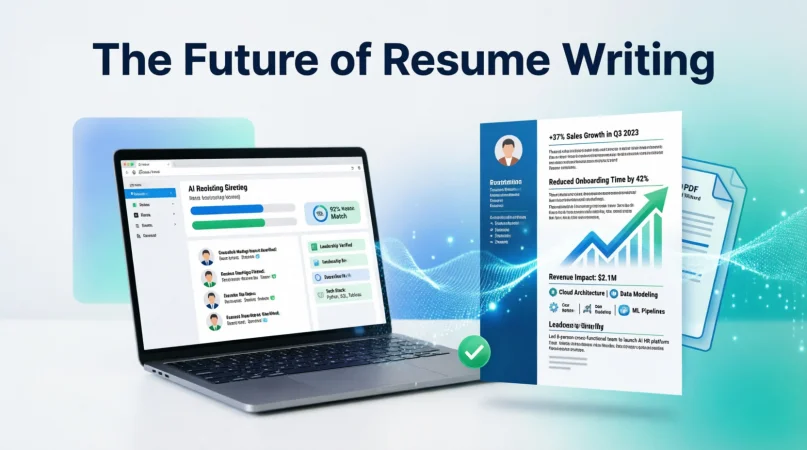
Artificial intelligence screening tools, applicant tracking systems, and data-driven hiring practices increasingly reward clarity and specificity.
As a result, generic phrases lose effectiveness.
The resumes that stand out today focus on:
- Quantifiable achievements
- Business impact
- Technical proficiency
- Leadership results
- Clear communication
The goal isn’t simply to describe what you did.
The goal is to demonstrate the value you delivered.
FAQs
1. Is “hands-on experience” a good phrase to use in a resume?
Yes, “hands-on experience” is a correct and commonly used phrase in resumes. It shows that you have gained practical knowledge through direct involvement rather than only theoretical learning. However, because many applicants use this phrase, choosing more specific alternatives can help your resume stand out and better explain your actual skills.
2. What are better alternatives to “hands-on experience” on a resume?
Some stronger alternatives include practical experience, direct experience, applied experience, and real-world experience. The best choice depends on your background and the type of role you are applying for. For example, applied experience works well for technical fields, while professional experience may fit corporate roles better.
3. Can I use “hands-on experience” in a professional summary?
Yes, you can use “hands-on experience” in a professional summary, but make sure you support it with specific examples. Instead of simply writing that you have hands-on experience, explain what you accomplished, such as managing projects, improving processes, using software tools, or leading team activities.
4. Why should I avoid repeating “hands-on experience” throughout my resume?
Repeating the same phrase can make your resume feel less engaging and less personalized. Recruiters prefer clear and varied language that highlights your achievements. Using different terms while maintaining consistency can make your resume writing stronger and more professional.
5. How can I show hands-on skills without using the phrase “hands-on experience”?
You can demonstrate practical skills by describing your actions and results. Use achievement-focused phrases like “managed client projects,” “developed solutions,” “implemented strategies,” or “operated professional tools.” These examples provide evidence of your abilities instead of only describing them.
6. Does word choice affect how recruiters view a resume?
Yes, word choice plays a major role in how recruiters understand your qualifications. Strong professional language, accurate grammar, and effective formal writing help create a positive impression. Specific phrases can highlight your expertise in areas such as project management, business communication, and workplace problem-solving.
Conclusion
Using the phrase “hands-on experience” in your resume is not wrong, but choosing more precise alternatives can make your qualifications appear stronger and more professional. Modern resumes need language that clearly explains your abilities, achievements, and real-world contributions rather than relying on common phrases that many applicants use.
Alternatives such as practical experience, direct experience, applied experience, and professional experience allow you to present your skills with greater clarity. The right choice depends on your career field, accomplishments, and the message you want to communicate to potential employers.
A well-written resume combines strong vocabulary, proper English usage, accurate grammar, and consistent formatting. By selecting meaningful phrases and supporting them with real examples, you can create a resume that reflects your value, improves your professional image, and helps recruiters understand what you can bring to their organization.

Emma Brooke is an English language specialist, editor, and content writer at Phrase Finesse, where she helps readers develop stronger writing and communication skills through clear, practical, and engaging content. With a passion for the English language, she specializes in simplifying grammar rules, vocabulary, spelling, punctuation, and word usage for learners at every level.
Emma has extensive experience creating educational content that is accurate, well-researched, and easy to understand. She is particularly skilled at explaining confusing word pairs, grammar concepts, idioms, sentence structure, and effective writing techniques, making complex topics approachable for students, professionals, educators, and English learners worldwide.