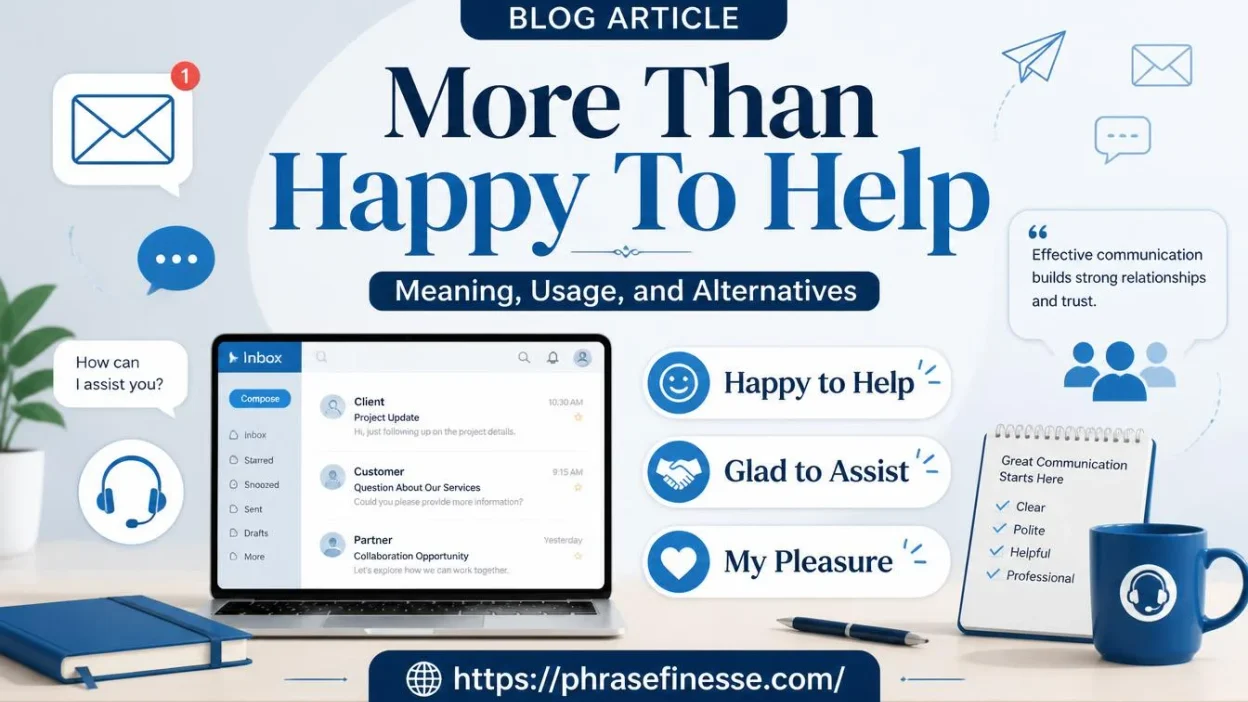
Have you ever wondered whether “More Than Happy To Help” sounds professional, warm, or overly casual in an email? If so, this guideMore Than Happy To Help: Meaning, Usage, and Alternatives, will give you the clarity you need.
Whether you’re replying to a colleague, client, or customer, understanding the meaning, tone, and correct usage of this common expression can make your business communication more natural and effective.
In this article, you’ll learn exactly what “More Than Happy To Help” means, when it fits different situations, and how to use it with confidence in formal writing and everyday conversations.
You’ll also find realistic example sentences, professional email examples, and practical tips for maintaining consistency in your English usage and grammar. These examples cover workplace scenarios involving meetings, project management, scheduling, time management, and customer support, helping you communicate with greater clarity and professionalism.
You’ll also discover when this phrase works best, when a different expression may sound more appropriate, and how context influences its impact.
From replying about online booking, confirming a calendar invitation, assisting with broadcasting projects, or offering support during collaborative tasks, this guide provides clear, real-world examples that improve both confidence and communication. By the end, you’ll know how to use this phrase naturally, professionally, and effectively in any situation.
What Does “More Than Happy To Help” Mean?
The expression “more than happy to help” means that someone is very willing and pleased to provide assistance.
Rather than simply agreeing to help, the speaker emphasizes that they are genuinely glad to do so.
Simple Definition
More than happy to help = Very willing, pleased, and enthusiastic about helping someone.
For example:
“If you have any questions about the report, I’m more than happy to help.”
In this sentence, the speaker isn’t merely offering assistance. They’re communicating that helping is something they welcome.
What Tone Does the Phrase Convey?
One reason this expression remains popular is its versatility.
It can communicate:
- Warmth
- Friendliness
- Professionalism
- Approachability
- Cooperation
- Positive intent
When someone uses the phrase, they often want the recipient to feel comfortable asking for assistance.
What Does It Imply Beyond the Words?
Language often carries meaning beneath the surface.
When someone says they’re more than happy to help, they usually imply:
| Implied Meaning | Explanation |
| Your request is welcome | The speaker doesn’t see helping as a burden |
| I value our relationship | The phrase builds goodwill |
| Feel free to ask questions | It encourages communication |
| I’m approachable | The speaker wants to seem accessible |
| I’m genuinely willing to assist | The offer is intended to sound sincere |
Think of it as opening a door rather than simply pointing to it.
Is “More Than Happy To Help” Grammatically Correct?
Yes. “More than happy to help” is completely grammatically correct.
Native speakers use it regularly in both spoken and written English.
Why It Works Grammatically
The phrase uses a common English structure:
More than + adjective
Examples include:
- More than willing
- More than capable
- More than ready
- More than qualified
- More than happy
In this construction, “more than” functions as an intensifier. It strengthens the adjective that follows.
Therefore:
- Happy to help = willing to help
- More than happy to help = especially willing to help
Why Native Speakers Love This Expression
The phrase strikes a balance between professionalism and friendliness.
Consider the difference:
Basic:
“I can help.”
Warmer:
“I’m happy to help.”
Most welcoming:
“I’m more than happy to help.”
Each version becomes increasingly positive.
That extra warmth often matters in customer service, teamwork, leadership, and client communication.
When Should You Use “More Than Happy To Help”?
Although versatile, the phrase works best in situations where positive interpersonal communication matters.
Using “More Than Happy To Help” at Work
Workplaces thrive on collaboration.
When colleagues support each other, projects move faster and relationships become stronger.
Examples:
“If you’d like another set of eyes on the presentation, I’m more than happy to help.”
“Let me know if you need assistance preparing for the meeting. I’m more than happy to help.”
The phrase helps create a cooperative atmosphere.
Using the Phrase in Business Emails
Email lacks facial expressions and vocal tone.
Because of this, messages can sometimes sound cold even when they aren’t intended that way.
Adding a friendly phrase helps soften communication.
Example:
“Please let me know if you need additional information. I’m more than happy to help.”
This sounds far more welcoming than:
“Contact me if you need information.”
Customer Service Situations
Customer support professionals use this phrase frequently.
Why?
Because customers want reassurance.
Example:
“If you experience any issues during setup, we’re more than happy to help.”
This wording reduces anxiety and builds trust.
Everyday Conversations
The phrase isn’t limited to workplaces.
You’ll hear it among friends and family as well.
Examples:
- Helping a friend move
- Assisting with homework
- Giving directions
- Offering advice
For instance:
“If you need help planning the party, I’m more than happy to help.”
When Should You Avoid “More Than Happy To Help”?
Despite its popularity, this expression doesn’t fit every situation.
Choosing the wrong tone can make communication feel unnatural.
When the Situation Requires Formality
Certain professional documents require direct language.
Examples include:
- Legal notices
- Contracts
- Compliance reports
- Academic papers
In these contexts, emotional expressions often feel out of place.
Instead of:
“We’re more than happy to help.”
You might write:
“Please contact the department for assistance.”
When You Can’t Actually Help
One common mistake involves making promises that can’t be fulfilled.
If you’re unsure whether assistance is possible, avoid enthusiastic guarantees.
Instead:
“I’ll review the situation and see what options are available.”
Honesty always beats excessive enthusiasm.
During Urgent Situations
When immediate action is required, concise communication works better.
For example:
Instead of:
“We’re more than happy to help resolve the outage.”
Use:
“Our team is actively resolving the outage.”
Clear communication becomes the priority.
Examples of “More Than Happy To Help” in Sentences
The best way to understand a phrase is through real-world examples.
Professional Examples
Project Assistance
“If you’d like feedback before submitting the proposal, I’m more than happy to help.”
Training a New Employee
“Feel free to reach out anytime during onboarding. I’m more than happy to help.”
Department Collaboration
“Our team is more than happy to help with implementation.”
Management Support
“If you need clarification regarding the objectives, I’m more than happy to help.”
Customer Service Examples
Product Questions
“If you’d like more information about our plans, we’re more than happy to help.”
Technical Support
“Our technicians are more than happy to help troubleshoot the issue.”
Billing Questions
“Please contact support if anything looks incorrect. We’re more than happy to help.”
Account Setup
“Need assistance getting started? We’re more than happy to help.”
Everyday Examples
Helping a Friend
“If you need help moving this weekend, I’m more than happy to help.”
School Projects
“I’m more than happy to help you study for the exam.”
Family Assistance
“If you’d like help organizing the garage, I’m more than happy to help.”
Community Events
“The volunteers are more than happy to help visitors find their way.”
“More Than Happy To Help” Email Examples
Email communication often benefits from polite and supportive language.
Here are practical examples.
Client Request Email
Subject: Re: Marketing Strategy Questions
Hello Sarah,
Thank you for reaching out.
I’ve attached the requested materials and additional resources that may be useful.
If you need clarification on any section or would like to discuss implementation strategies, I’m more than happy to help.
Best regards,
James
See More :Take a Decision vs. Make a Decision: Which Is Correct?
Coworker Support Email
Subject: Re: Presentation Review
Hi Mark,
I reviewed the slides and left comments throughout the document.
Everything looks strong overall.
If you’d like to discuss any recommendations before tomorrow’s meeting, I’m more than happy to help.
Thanks,
Emily
Customer Service Email
Subject: Your Account Setup
Hello,
Thank you for creating your account.
Everything appears to be configured correctly.
If you have questions while getting started, we’re more than happy to help.
Kind regards,
Customer Support Team
Mentor or Trainer Email
Subject: Welcome to the Team
Hi Jessica,
Welcome aboard.
Starting a new role can feel overwhelming at first. Don’t hesitate to ask questions.
If you need guidance regarding any process, I’m more than happy to help.
Best,
Michael
Better Alternatives to “More Than Happy To Help”
Although effective, repeating the same phrase can make writing sound repetitive.
Fortunately, several excellent alternatives exist.
Formal Alternatives to “More Than Happy To Help”
These options work well in corporate communication.
| Alternative | Tone |
| I’d be pleased to assist | Formal |
| I’d be delighted to assist | Formal |
| I’d be glad to assist | Professional |
| Please feel free to contact me | Formal |
| I’m available to provide support | Formal |
| I’d welcome the opportunity to help | Formal |
Examples:
“I’d be pleased to assist with your request.”
“I’d be delighted to answer any questions.”
Neutral Alternatives
Useful for everyday business communication.
- Happy to help
- Certainly
- Of course
- Absolutely
- Feel free to ask
- Let me know if you need anything
Example:
“Feel free to ask if you need additional information.”
Friendly Alternatives
Ideal for casual interactions.
- I’d love to help
- Count me in
- Anytime
- No problem
- My pleasure
- Happy to pitch in
Example:
“Need help with the move? I’d love to help.”
Comparison Table: Similar Expressions
| Phrase | Formality | Warmth | Professional Use |
| More than happy to help | Medium | Very High | Excellent |
| Happy to help | Medium | High | Excellent |
| Glad to help | Medium | Medium | Excellent |
| Delighted to assist | High | High | Very Good |
| My pleasure | Medium | High | Good |
| No problem | Low | Medium | Limited |
| I’d love to help | Low | Very High | Casual |
Common Mistakes When Using “More Than Happy To Help”
Even good phrases can lose effectiveness when used incorrectly.
Overusing It
Some professionals add the phrase to every email.
Eventually, readers stop noticing it.
Variety improves communication.
Rotate among alternatives when appropriate.
Sounding Insincere
People quickly recognize forced enthusiasm.
Imagine receiving:
“We’re more than happy to help.”
Then waiting two weeks for a response.
The words and actions don’t match.
Authenticity matters.
Using It in Highly Formal Documents
Formal documents prioritize precision.
Enthusiastic expressions may feel misplaced.
Always match tone to context.
Creating Unnecessary Wordiness
Sometimes shorter works better.
Compare:
“I’m more than happy to help with the project.”
Versus:
“I’m happy to help with the project.”
The second version may sound cleaner.
Choose the level of enthusiasm that fits the situation.
How To Respond When Someone Says “More Than Happy To Help”
Responding appropriately helps maintain positive communication.
Professional Responses
- Thank you for your assistance.
- I appreciate your support.
- That’s very helpful.
- Thank you for your time.
Example:
“Thank you. I appreciate your willingness to help.”
Friendly Responses
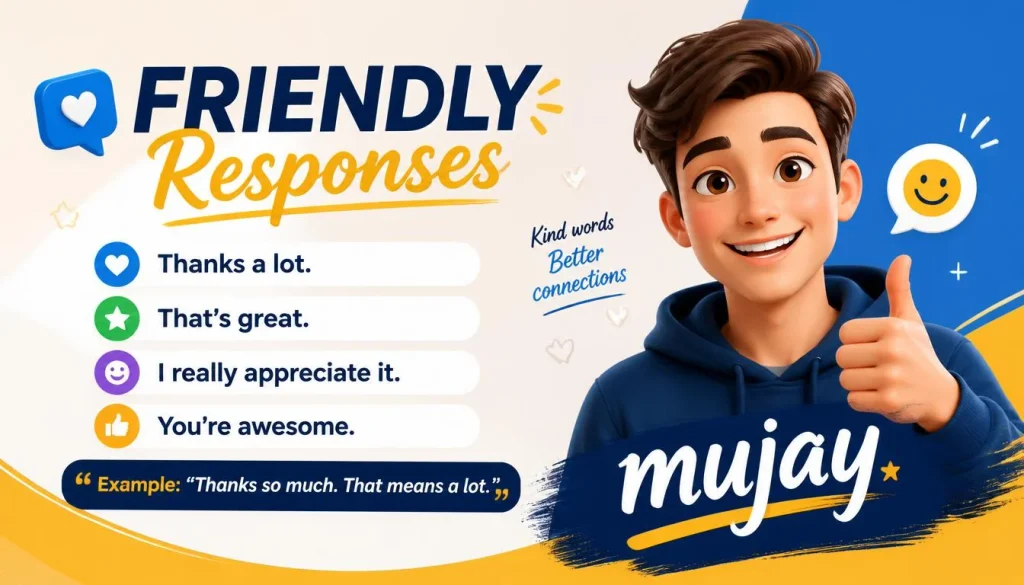
- Thanks a lot.
- That’s great.
- I really appreciate it.
- You’re awesome.
Example:
“Thanks so much. That means a lot.”
Follow-Up Responses
When additional clarification is needed:
“Thank you. Could you also explain the next step?”
or
“I appreciate it. Would you mind reviewing this section as well?”
Case Study: Why This Phrase Works So Well in Business Communication
Imagine two customer service representatives handling identical requests.
Representative A
“Your issue has been received. Contact us if necessary.”
Representative B
“We’ve received your request. If you have any questions during the process, we’re more than happy to help.”
Which response feels more reassuring?
Most customers prefer Representative B.
The information remains the same. The emotional experience changes.
This illustrates an important communication principle:
People remember how communication makes them feel, not just what it says.
A small phrase can significantly improve customer perception.
Quick Usage Guide
| Situation | Recommended? |
| Business email | Yes |
| Customer service | Yes |
| Team collaboration | Yes |
| Mentoring employees | Yes |
| Casual conversations | Yes |
| Legal documents | No |
| Academic papers | No |
| Emergency notices | No |
| Technical instructions | Usually No |
FAQs
1: What does “More Than Happy To Help” mean?
“More Than Happy To Help” means you are very willing and pleased to assist someone. It expresses genuine enthusiasm rather than simply agreeing to help, making it a friendly and positive phrase in both personal and professional conversations.
2: Is “More Than Happy To Help” professional?
Yes. “More Than Happy To Help” is considered professional when used appropriately. It is common in customer service, workplace emails, and business communication because it conveys courtesy, confidence, and a helpful attitude without sounding overly formal.
3: Can I use “More Than Happy To Help” in formal emails?
Absolutely. The phrase is suitable for many formal writing situations, especially when responding to requests, confirming assistance, arranging meetings, discussing project management, or helping clients. For highly formal legal or academic communication, a more neutral phrase such as “I would be pleased to assist” may be preferred.
4: What are some alternatives to “More Than Happy To Help”?
Depending on the context, you can use alternatives such as:
- I’d be glad to help.
- I’d be happy to assist.
- It’s my pleasure.
- I’m always available to help.
- Please let me know if you need anything else.
Each option offers a slightly different tone while keeping your message professional.
5: Is “More Than Happy To Help” grammatically correct?
Yes. “More Than Happy To Help” is grammatically correct and widely accepted in modern English usage. The phrase emphasizes your willingness to help and is commonly used in spoken English, emails, and professional correspondence.
6: When should I avoid using “More Than Happy To Help”?
You may want to avoid the phrase if you cannot realistically provide assistance or when the situation requires a more formal, objective tone. In those cases, direct alternatives such as “I can assist with that” or “I would be pleased to assist” may be more appropriate.
Conclusion
The phrase “More Than Happy To Help” is a warm, professional way to express your willingness to assist someone. It works well in business communication, customer service, workplace conversations, and everyday emails because it sounds both polite and approachable. When used in the right context, it helps build stronger professional relationships while keeping your message clear and genuine.
By understanding its meaning, tone, and proper usage, you can confidently include this expression in your formal writing and daily communication. The 12 example sentences and emails in this guide show how to use the phrase naturally across different situations, making your English usage more fluent, consistent, and effective.

Emma Brooke is an English language specialist, editor, and content writer at Phrase Finesse, where she helps readers develop stronger writing and communication skills through clear, practical, and engaging content. With a passion for the English language, she specializes in simplifying grammar rules, vocabulary, spelling, punctuation, and word usage for learners at every level.
Emma has extensive experience creating educational content that is accurate, well-researched, and easy to understand. She is particularly skilled at explaining confusing word pairs, grammar concepts, idioms, sentence structure, and effective writing techniques, making complex topics approachable for students, professionals, educators, and English learners worldwide.
[…] See More :More Than Happy To Help: Meaning, Usage, and Alternatives […]
[…] See More :More Than Happy To Help: Meaning, Usage, and Alternatives […]
[…] See More :More Than Happy To Help: Meaning, Usage, and Alternatives […]